Generative AI Video in 2026: From Sora to OpenAI S2 — The State of AI Video Generation
OpenAI discontinued Sora in 2026. Here's the complete overview of the AI video generation landscape — Google Veo 3.1, Kling 3.0, pricing, and what's next.
Sora Is Dead: OpenAI's Surprise Exit from AI Video Generation
Today marks a turning point in the AI video industry. OpenAI officially discontinued its Sora text-to-video generator app on April 26, 2026. The Sora API — the backbone for developers who built third-party integrations — will shut down completely on September 24, 2026.
This is not a pause. It is an ending.
For months, Sora stood as the benchmark for AI-generated video quality. It could produce 60-second cinematic clips from simple text prompts. It had partnerships with Disney for character licensing. It was the tool that made competitors scramble to catch up. And now, less than two years after its public debut, it is being turned off.
The numbers explain why. OpenAI is projected to lose $25 billion in 2026. The computational cost of generating high-quality AI video proved unsustainable for a consumer-facing product. So OpenAI made a strategic choice: pivot toward enterprise AI tools and robotics — what the company calls "world models" — and prepare for a planned IPO in late 2026.
Users who built content with Sora have until September to export everything. After that date, all data will be permanently deleted.
The exit of OpenAI from consumer AI video generation sends a clear signal to the market. Even the best-funded AI lab cannot keep burning money on compute-intensive video generation without a clear path to profitability. It also raises questions about the viability of other consumer-facing AI video products. But for competitors, Sora's departure represents an opportunity to capture the audience it leaves behind.
Key insight — OpenAI's exit from AI video is not a sign that the technology failed. The opposite: Sora pushed the entire industry forward, and its discontinuation reflects the unsustainable economics of running compute-heavy video generation at consumer price points.
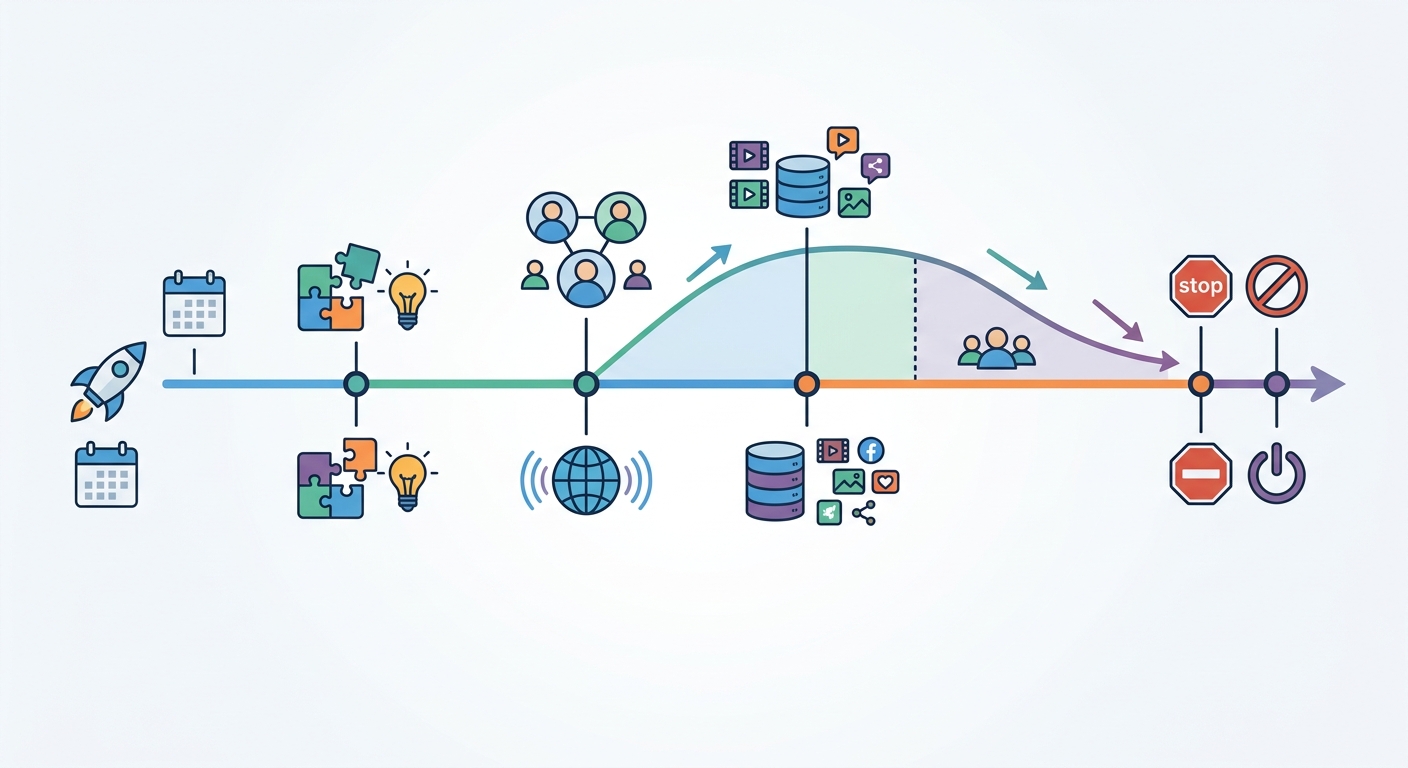
Why OpenAI Pulled the Plug on Sora
The story of Sora is ultimately a story about economics. Generating a single high-quality video clip requires enormous computational resources. Each generation session burns through GPU time that costs money — often significant money — even at scale.
Consumer products need low latency and high availability. Professional video editors need fast turnaround. Neither of these constraints is compatible with the reality of training and running a state-of-the-art video generation model at consumer-friendly price points.
OpenAI tried to solve this with tiered pricing — ChatGPT Plus and Pro plans gave users access — but even that was not enough to offset the costs. The company made a cold calculation: AI video generation for consumers was not going to be profitable enough, fast enough, to justify the continued investment.
The strategic shift also reflects where OpenAI sees the highest-value AI applications. World models — AI systems that understand and simulate the physical world — have applications in robotics, autonomous vehicles, and industrial automation. These are markets where the same video generation technology can command enterprise-level contracts with far better unit economics.
The IPO angle matters too. OpenAI is preparing to go public, and investors want to see a clear path to profitability. Continuing to subsidize a loss-making consumer video product does not fit that narrative.
The New Titans of AI Video: Google Veo 3.1 vs. Kling 3.0
With Sora exiting, two platforms have stepped forward as the new leaders in AI video generation. They are very different in their approach, and understanding those differences is key to choosing the right tool.
Google Veo 3.1 — The Cinematic Leader
Google Veo 3.1 has earned its position as the most recommended AI video generator in 2026. The quality is exceptional — cinematic visuals, natural lighting, smooth camera movements, and physics that behave correctly more often than not.
Veo 3.1 outputs 1080p and 4K video. Base clips are 8 seconds, extendable to 60 seconds with additional generations. Native audio generation is included — not a separate tool, but synchronized sound built into the generation process.
The character anchoring technology deserves special mention. One of the longstanding problems with AI video has been "character drift" — a person starts generating with one face and ends with a different one by the end of a clip. Veo 3.1 largely solves this, keeping characters consistent throughout a generated sequence.
Pricing starts at $19.99/month on the AI Pro plan. The tool is accessible through Google AI Studio and integrates with the broader Google ecosystem — Gemini, Google Workspace, and related products.
For teams already embedded in Google's ecosystem, Veo 3.1 is the natural choice. It slots into existing workflows with minimal friction and delivers professional-grade output.
Kling 3.0 — The Storytelling Engine
If Veo 3.1 wins on raw cinematic quality, Kling 3.0 wins on something equally important: narrative production. The platform — developed by Kuaishou, the company behind TikTok's rival app — has shifted the conversation from generating isolated clips to producing full stories.
The most significant technical achievement in Kling 3.0 is Elements 3.0. This feature effectively solves the character consistency problem across multiple shots. For marketers or filmmakers who need to maintain the same actor or character across an entire sequence, this is a genuine breakthrough.
Kling 3.0 supports multi-shot sequencing — the ability to generate an entire story with multiple camera angles in a single prompt. Native audio synchronization is built in, keeping dialogue, sound effects, and ambient atmosphere aligned with visuals.
Output reaches 4K resolution. Commercial-grade text rendering is supported, meaning text overlays and titles can be generated directly within the video. The platform can also animate still images into video clips.
Pricing is usage-based at approximately $0.07 per second. A monthly subscription starts around $9.80, making it competitive for creators who need higher volumes.
The ideal use case for Kling 3.0 is advertising, structured storytelling, and any project where character consistency and narrative flow matter more than raw cinematic polish.
Key insight — Kling 3.0's Elements 3.0 feature solves a problem that plagued every AI video generator in 2024 and 2025: characters changing appearance mid-sequence. For any project requiring visual continuity, this is a game-changing capability.
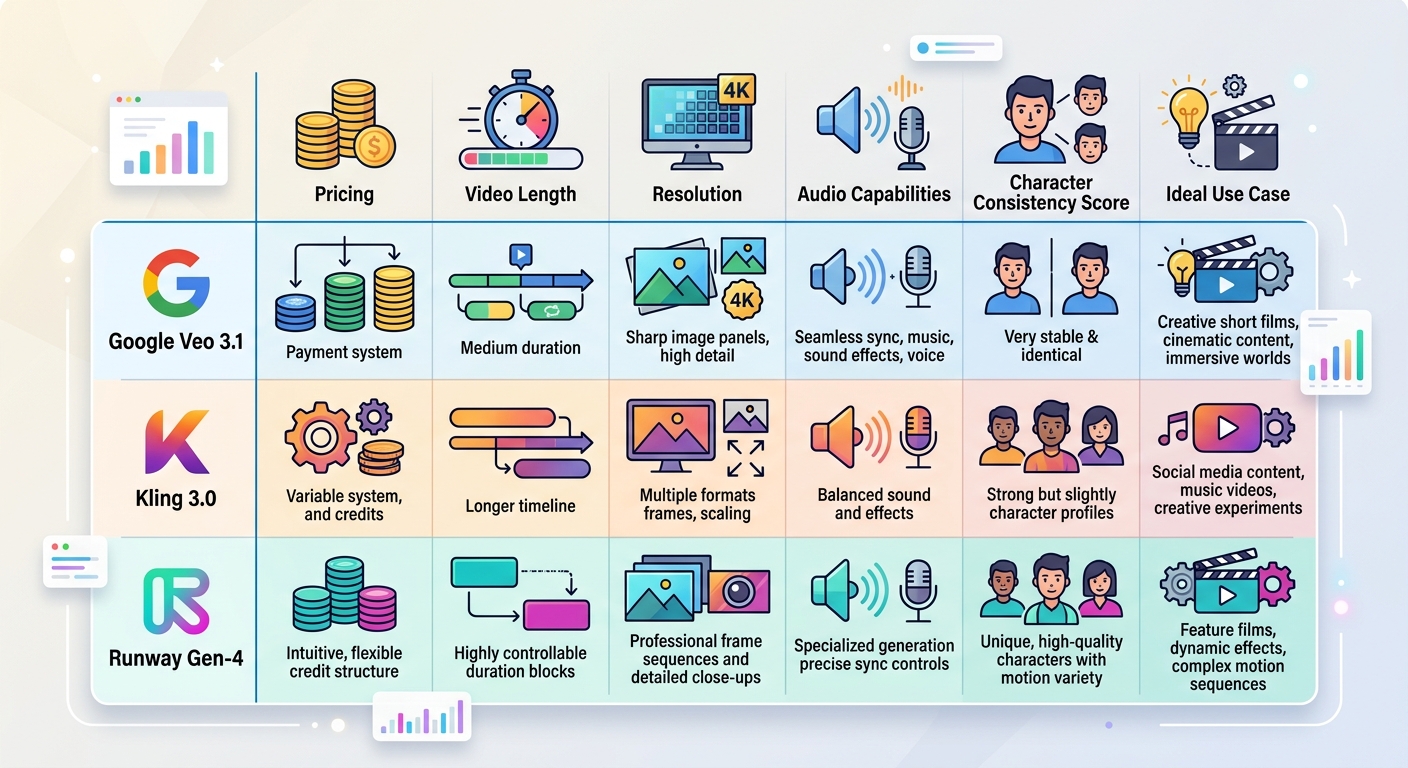
The Full AI Video Landscape in 2026
The exit of Sora did not leave a vacuum. The market is now valued at $847 million in 2026 with an 18.8% annual growth rate. Competition is fierce, and the gap between leaders and laggards is widening.
Runway Gen-4 has carved out a niche in professional production workflows. Its focus on temporal consistency — maintaining visual coherence across frames over time — makes it popular for commercial work where quality must be consistent, not just impressive in isolation.
ByteDance Seedance 2.0 is the dark horse. Backed by the company behind TikTok, Seedance supports multimodal input: up to 9 images, 3 video clips, and 3 audio files can be combined in a single generation. Native lip-sync across multiple languages sets it apart for global content teams.
Pika 2.5 targets creative effects. Its toolkit is designed for stylized, non-photorealistic video generation — useful for music videos, artistic projects, and content that does not require documentary-level realism.
Luma Dream Machine focuses on iterative creation. Its multi-model access allows creators to refine outputs through multiple passes, making it a strong choice for experimental or highly specific creative work.
Adobe Firefly and Canva occupy a different space: commercially-safe generation. Both are positioned for marketing teams that need guaranteed commercial usage rights — an increasingly important consideration as AI video copyright law continues to develop.
The diversity of the current landscape is remarkable. A year ago, Sora seemed untouchable. Today, the market has fragmented into specialized tools, each optimized for different use cases. That is ultimately good for creators — more choice, better fit, and competitive pricing.
What Changed: Key AI Video Technology Breakthroughs
The AI video generators of 2026 are not the same tools that launched in 2024. Several technical breakthroughs have redefined what is possible.
Character consistency is perhaps the most significant. Tools like Kling's Elements 3.0 and Veo's anchoring technology have cracked a problem that made early AI video nearly unusable for any project requiring the same person across multiple shots. Characters no longer drift into strangers by the end of a clip.
Native audio generation has matured. In 2024, audio was often a separate post-production step. In 2026, synchronized dialogue and sound effects are standard features across major platforms. The integration of audio understanding into the generation process means sounds match what is happening on screen more naturally.
Multi-shot sequencing enables true narrative production. Rather than generating one clip at a time, creators can specify entire story arcs and receive coherent sequences with multiple camera angles, consistent characters, and matching audio. This shifts AI video from a clip generator to a production engine.
4K output is no longer a premium feature. It is available across Veo, Kling, Seedance, and most competing platforms. Resolution is no longer the limiting factor — realism, coherence, and control are.
The combined effect of these advances is a dramatic reduction in production costs. AI video generation now costs over 90% less than traditional video production in many use cases. A marketing video that once required a crew, equipment, and post-production can now be conceptualized, generated, and refined in hours by a single creator.
Key statistic — AI video generation reduces production costs by over 90% compared to traditional video. A 60-second marketing video that once cost thousands of dollars in production time now costs cents to generate.
AI Video Pricing in 2026: Cost Breakdown
Understanding what you will actually pay is critical for budgeting. Here is the current pricing landscape.
Google Veo 3.1 starts at $19.99/month on the AI Pro plan. This includes access to the full feature set, including 4K output and native audio generation.
Runway Gen-4 is available from $12/month. Free plans exist but come with watermarks, limited credits, and lower resolution options.
Kling 3.0 uses a per-second model at approximately $0.07. A monthly subscription begins around $9.80 for higher-volume users.
HeyGen starts at $29/month. Synthesia begins at $18/month for talking-head style AI videos with realistic avatars.
Free tiers are available across most platforms, but they come with constraints. Clips are typically capped at 5-10 seconds, resolution is limited to 480p or 720p, and generated videos carry watermarks.
For commercial use, the math still works out in AI video's favor. Even at premium tier pricing, a 60-second AI-generated marketing video costs a fraction of what a professionally produced equivalent would cost. The $90%+ savings are real and represent a genuine disruption to the traditional video production industry.
The Future of AI Video Beyond 2026
What comes next is already taking shape. Real-time interactive video generation is on the horizon for late 2026 — the ability to manipulate camera angles, lighting, and character expressions on the fly during the generation process. AI becomes an interactive collaborator rather than a one-shot generator.
Hyper-personalization is another direction. Narratives that adapt dynamically based on audience data, viewer input, or real-time context. Think of it as branching storytelling at scale — the same core video customized for different segments automatically.
The industry shift is also organizational. Companies adopting AI video are building human review workflows, brand control guidelines, and approval processes. The technology is mature enough for production use; the challenge is now organizational, not technical.
OpenAI's exit may have been about economics, but it has not slowed the broader industry. The market is growing. Competition is intensifying. And the tools available today would have seemed like science fiction three years ago.
How to Choose the Right AI Video Generator
The choice depends on your priority.
Choose Google Veo 3.1 if cinematic quality and realism are paramount. It leads in visual fidelity and integrates naturally with Google's ecosystem.
Choose Kling 3.0 if you are producing structured narratives with consistent characters across multiple shots. Its storytelling tools are unmatched at this stage.
Choose Runway Gen-4 for professional production workflows where temporal consistency across long sequences matters more than individual clip quality.
Start with free tiers to test the output quality for your specific use case. Most platforms let you generate sample clips before committing to a paid plan.
The AI video generation market has matured. Sora's exit marks the end of an era, but the technology is stronger than ever. The tools available today offer capabilities that were unimaginable a few years ago — and the rate of improvement shows no sign of slowing down.
Expert Q&A
Q: Sora was discontinued in April 2026, but it was available for less than two years. Does this mean AI video generation is not commercially viable for consumers?
A: Not exactly. Sora's discontinuation reflects the specific economics of OpenAI's operation — massive compute costs combined with consumer pricing that could not sustain them. Other platforms are profitable or approaching profitability at consumer price points because they operate with different cost structures or cross-subsidize through enterprise tiers. The market continued growing after Sora's exit, reaching $847 million in 2026. The technology works; the challenge was OpenAI's unit economics, not a fundamental flaw in AI video generation itself.
Q: I need consistent characters across a 5-shot commercial sequence. Which platform handles this best in 2026?
A: Kling 3.0 with its Elements 3.0 feature is currently the strongest option for multi-shot character consistency. It was designed specifically for this use case and maintains the same character across multiple shots within a single generation session. Google Veo 3.1's character anchoring technology also performs well for this scenario, though it is better suited for single-clip productions. If you are producing a full narrative sequence with the same actor throughout, Kling 3.0 should be your starting point. Test both with your specific prompts before committing — character consistency performance can vary depending on prompt complexity.
Q: We want to integrate AI video generation into our marketing workflow but are concerned about copyright and commercial use rights. What should we know?
A: This is one of the most active areas of legal development in AI. Key points: Adobe Firefly and Canva offer the strongest commercial use guarantees because they were trained on licensed or public domain content. Google Veo and Kling 3.0 permit commercial use, but the legal landscape around AI-generated content copyright is still evolving — especially regarding who owns the output. ByteDance Seedance 2.0 also permits commercial use. When evaluating platforms for enterprise marketing use, ask specifically about the training data provenance and any indemnification they offer. Many brands are now requiring this documentation from legal teams before approving AI video tools for campaign work.
Q: We have a limited budget and need to generate 30+ videos per month for social media. What is the most cost-effective approach?
A: For high-volume social media content, Kling 3.0's per-second pricing model is typically the most cost-effective at scale. At $0.07 per second, a 10-second clip costs approximately $0.70. Generate 30 clips per month at 10 seconds each and you are looking at roughly $21 in generation costs, plus the monthly subscription. This is significantly cheaper than per-clip subscription models for high-volume use cases. However, if you need shorter clips (under 5 seconds), free tiers — particularly Adobe Firefly's free daily generations — can cover a portion of your needs without any subscription cost, provided you do not mind the daily limit resets.
Q: Is real-time interactive video generation actually available in 2026, or is it still experimental?
A: Real-time interactive video generation — where you can modify camera, lighting, and character expressions on the fly during generation — is not yet fully available as a consumer product as of mid-2026. It is anticipated for late 2026 from leading platforms, but the working implementations are primarily in research or enterprise preview programs. The practical available capability today is fast iteration — generating multiple variants quickly and selecting the best output — rather than true real-time manipulation. Treat "real-time interactive" claims in marketing materials with some skepticism; the current state of the technology is fast batch generation, not interactive session-based editing.
Image URLs
| # | Alt | URL |
|---|---|---|
| 1 | Timeline diagram showing Sora's lifecycle from launch in December 2024 to full discontinuation in September 2026 | /api/images/66f9025dd2354ba1ad1de3e0b217ec91 |
| 2 | Comparison table showing Google Veo 3.1 vs. Kling 3.0 vs. Runway Gen-4 | /api/images/3e35643223ef4e07b2604de5f9c761ad |
Total: 2 images uploaded