AI Video Generation Reaches the Enterprise: What Actually Works in Production
A field report on enterprise AI video generation: which use cases are production-ready, model comparison by task, and the pipeline that makes it scale.
The Shift From Demos to Production Deployments
For two years, AI video generation lived on social feeds—stunning sixty-second clips that hinted at a future nobody could quite schedule. That era is closing. Over the past twelve to eighteen months, enterprise contracts have started replacing viral threads, and the question from buyers has changed from "Can it do this?" to "Can it do this at scale, on brand, and inside our legal review?"
This article is a field report, not a hype piece. It draws on what engineering leaders and creative operations teams are actually shipping—and where the wheels still come off.
The thesis is simple: a narrow set of AI video use cases is production-ready today; most are not. Short-form marketing content and internal training video have crossed the threshold. Hero brand films, long-form narrative, and anything requiring precise physical realism have not. The gap between those two buckets is where budgets get wasted and programs stall.
What follows is organized for two readers at once: the builder assembling a pipeline and the buyer signing the invoice. Both need the same thing—an honest map of what works, what it costs, and what to instrument before scaling.
The Enterprise Adoption Curve Has Split in Two
What's Shipping vs. What's Still in Pilot
The pattern across deployments is consistent. Short-form marketing and social video are in production across a wide band of industries—retail, CPG, financial services, SaaS. These teams generate dozens to hundreds of variants per campaign, localize them across markets, and route them through existing review workflows. Internal training and enablement video is the second production workhorse: lower aesthetic bar, captive audience, high volume, fast iteration.
The pilot bucket is equally clear. Hero brand films and long-form narrative remain experimental. So do product demos requiring accurate UI, anything with on-camera talent continuity, and regulated claims-based advertising where a single visual error carries legal exposure.
The driver is not novelty—it's cost-per-approved-asset economics. Teams adopt when a generated clip costs a fraction of a shoot day and clears the quality bar for its channel. They stall when the bar is high enough that rejection rates erase the savings.
Which is why the number to instrument first is not cost-per-clip. It's first-pass yield: how many generated clips it takes to produce one asset you can legally publish. A tool that generates clips at a tenth of the cost but requires ten attempts per approval is not cheaper—it's the same cost with more review labor. Track two metrics together:
- Cost per generated clip — the raw model/compute cost.
- Cost per approved asset — total generation plus review plus edit labor divided by publishable outputs.
The gap between them is your real business case. Teams that only watch the first number scale into a wall.
"We stopped asking whether the model could make a beautiful clip. We started asking how many clips it takes to get one we can legally publish. That number is the whole business case." — Creative operations lead, Fortune 500 retailer (representative composite, paraphrased)
Model Comparison: What Each Class of AI Video Tool Is Actually Good For
Forget leaderboards. The right model is the one that fits your pipeline, and the same model can be excellent for one task and unusable for another. Compare by task, not by rank.
Text-to-Video vs. Image-to-Video vs. Video-to-Video
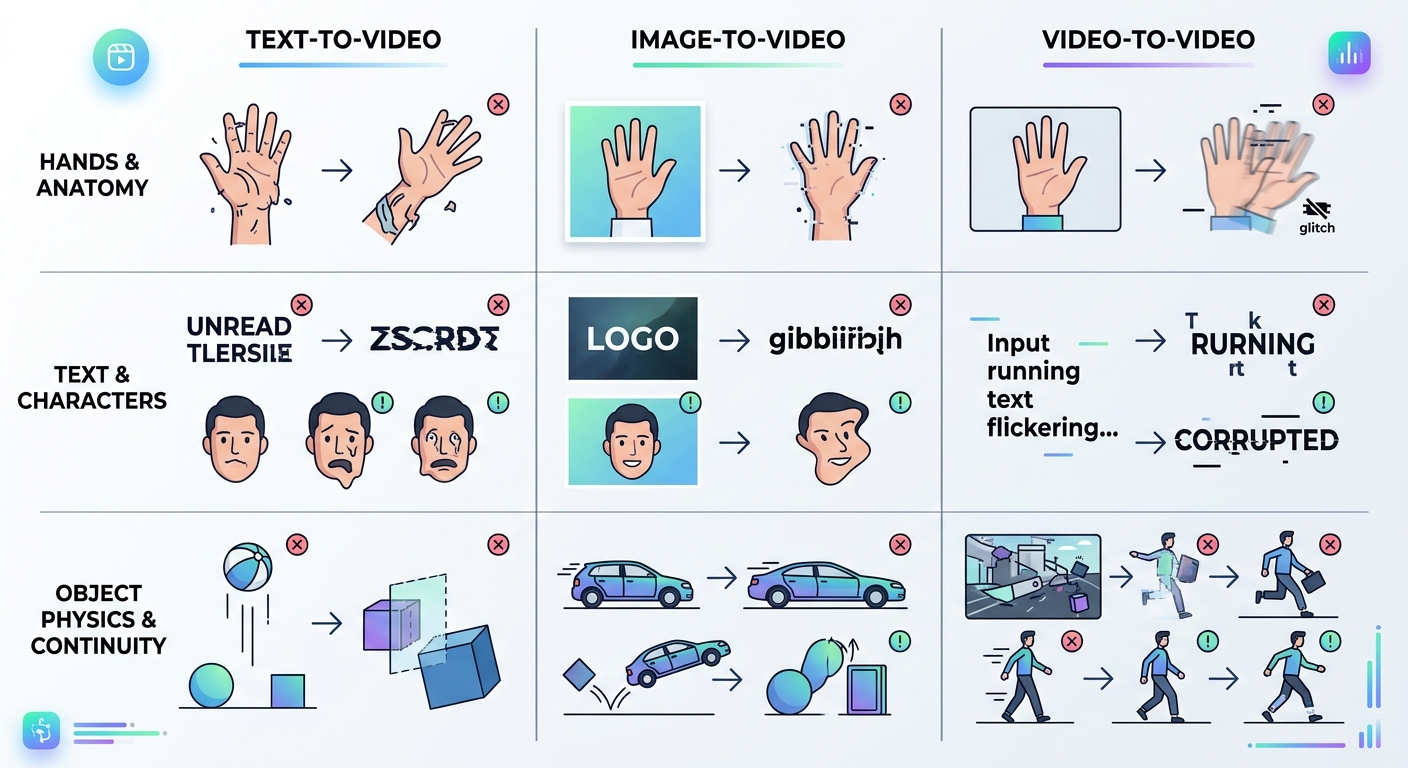
- Text-to-video is best for ideation, mood boards, b-roll, and abstract or stylized content. It's fast and cheap per attempt, but control is coarse—you describe, you don't direct. Use it where creative latitude is acceptable and brand precision is not critical.
- Image-to-video is the enterprise workhorse. Starting from an approved still—a product shot, a brand-approved frame—conditions the model on pixels you've already signed off, which raises brand fidelity and lowers variance and rejection rates. Most production marketing pipelines anchor here for that reason: you're not trusting the model to invent the brand, only to animate it.
- Video-to-video (restyling, upscaling, cleanup, format adaptation) is quietly the highest-ROI class for many teams. It operates on footage you already own—converting 16:9 to vertical, upscaling, fixing artifacts—so it sidesteps scene generation entirely, which is where most failures originate.
Clip-length and resolution constraints still shape design, and the operational consequence matters: most production work is assembled from short generated segments stitched in an editor, not single long takes. Shorter segments mean more edit points, more continuity seams to manage, and more review surface. Plan your pipeline around segments, not scenes—and budget the edit accordingly.
Where Quality Still Breaks Down—and How to Engineer Around It
The AI video failure modes are consistent and well-known to anyone who has shipped. The useful question isn't whether they exist; it's whether each is a blocker or a manageable pipeline stage:
- Hands and fine manipulation — still unreliable at scale. Mitigation: avoid close-up manipulation shots; frame hands out or at distance in generated footage.
- Text rendering — on-screen text, labels, and signage often corrupt. Mitigation: generate clean plates and overlay all text, logos, and signage in post. Treat any in-model text as unusable until proven otherwise.
- Physics — liquids, cloth, collisions, and weight behave plausibly only in controlled shots. Mitigation: keep physics-heavy moments stylized or short; don't hinge a product claim on simulated realism.
- Temporal consistency — characters, props, and lighting drift across segments. Mitigation: anchor each segment to approved reference frames, and keep shots short so drift has less runway to accumulate.
This is why human-in-the-loop review is not a temporary crutch—it's a pipeline stage. Budget for it as a permanent line item, not a transitional one. The teams that scale are the ones that treat these failure modes as design constraints, not surprises.
The Real Production Stack: Pipelines, Not Prompts
The single biggest misconception in enterprise AI video is that the tool is the product. It isn't. The pipeline is the product, and prompts are one input among many.
From Brief to Approved Asset
A working AI video production flow looks like this:
- Brief and storyboard — human-defined shot list, brand constraints, channel specs.
- Generation — model selected per shot type; often multiple models in one project.
- Review gate — creative and brand review against a defined, written quality bar.
- Edit — assembly, color, audio, text overlays in a traditional NLE.
- Brand QA and compliance — final sign-off, provenance tagging, archival.
Around that flow sits asset management and versioning: every generated clip needs a home, a lineage record (prompt, model, seed, reference inputs, approver), and a status. Teams that skip this drown in orphaned files within a quarter—and lose the ability to reproduce or defend any asset they published.
Integration matters more than feature lists. Connect to your existing DAM/MAM and editing suites rather than building a parallel universe of assets.
The Human Roles That Remain
Automation shifts labor; it doesn't remove it. The roles that persist in a mature pipeline are specific:
- Prompt/generation specialist — owns per-shot model selection and prompt craft; the person who knows which model to reach for.
- Editor — assembles segments, owns continuity, overlays, and pacing. This role grows, not shrinks, because segment-based generation increases edit complexity.
- Brand reviewer — enforces the written quality bar and brand system at the gate.
- Compliance/legal reviewer — clears claims, rights, and disclosure before publication.
Staff for these roles explicitly. A program that assumes generation replaces them will stall at the first review bottleneck.
Compliance, Provenance, and Rights
For regulated industries, this is the gate that decides whether a pilot ever ships. Build it in from the start:
- Content provenance. Attach C2PA-style content credentials and metadata to published assets so their synthetic origin is documented and auditable.
- Disclosure. Confirm what synthetic-media disclosure your channels and jurisdictions require for advertising, and build the disclosure into the asset template rather than bolting it on.
- Model and data licensing. Verify the commercial terms and indemnification for each model and dataset you use; terms differ materially and change.
- Reference rights. Clear rights for every approved still or frame you condition generation on—image-to-video inherits the rights of its inputs.
None of this is glamorous. All of it is what separates a production program from an expensive demo.
What to Instrument Before You Scale
Before expanding beyond a pilot, instrument these:
- First-pass yield and cost per approved asset — the two numbers that define your real economics.
- Rejection reasons, categorized by failure mode — tells you which mitigations to invest in.
- Review cycle time — the bottleneck that most often caps throughput.
- Provenance coverage — percentage of published assets with complete lineage records.
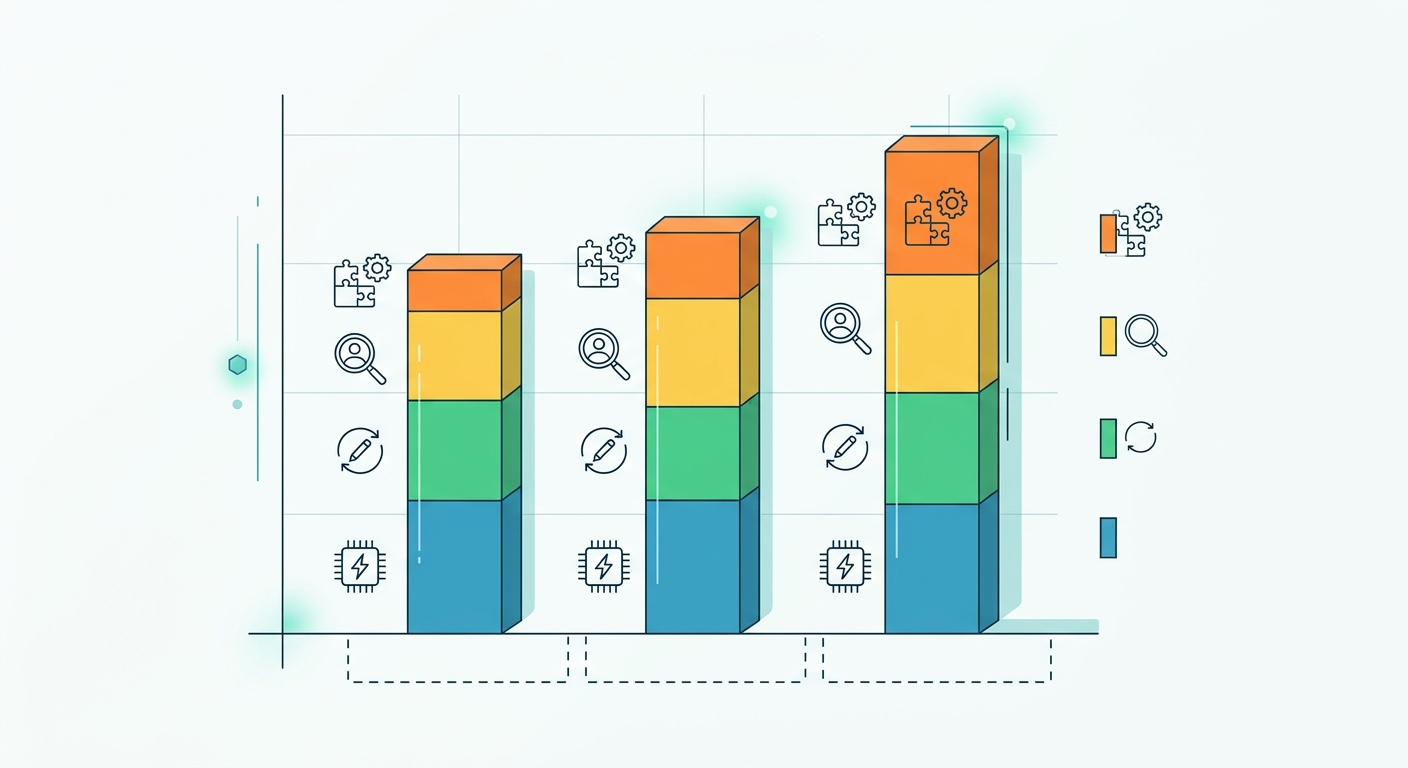
A program that can report these four numbers can defend its budget. A program that can't is one audit away from a pause.
The Bottom Line
AI video generation is real, useful, and narrowly production-ready. It wins where the quality bar is achievable and volume is high—short-form marketing and internal training. It loses where precision, continuity, or physical realism carry the weight. The teams succeeding in production are not the ones with the best model; they're the ones who built the pipeline, staffed the review gates, and instrumented the economics before they scaled.