The Enterprise Agent Startup Frenzy: What the 2026 Funding Wave Really Signals for IT Buyers
2026's record enterprise agent funding rounds tell IT buyers the category is real and consolidating. Here's a procurement playbook to turn the noise into disciplined agent buying.
The 2026 Funding Wave in Numbers
The enterprise agent market is no longer a rumor. In 2026, it became a fundraising machine. Startup after startup announced nine-figure rounds, and the numbers set new records for the agent category.
An AI agent is software that plans and executes multi-step tasks on its own, often across several business tools. In 2026, investors poured billions into companies that build, secure, and operate these agents.
The scale is hard to ignore. Engineering-agent startup Factory raised $200 million in September 2026, roughly tripling its valuation to about $5 billion. Security vendor Zenity closed a $125 million Series C in August. Prime Intellect raised a $130 million Series A to build the compute stack for enterprise agents. Finance research platform Rogo.ai took in $160 million. Agentic marketing company Hightouch added $150 million.
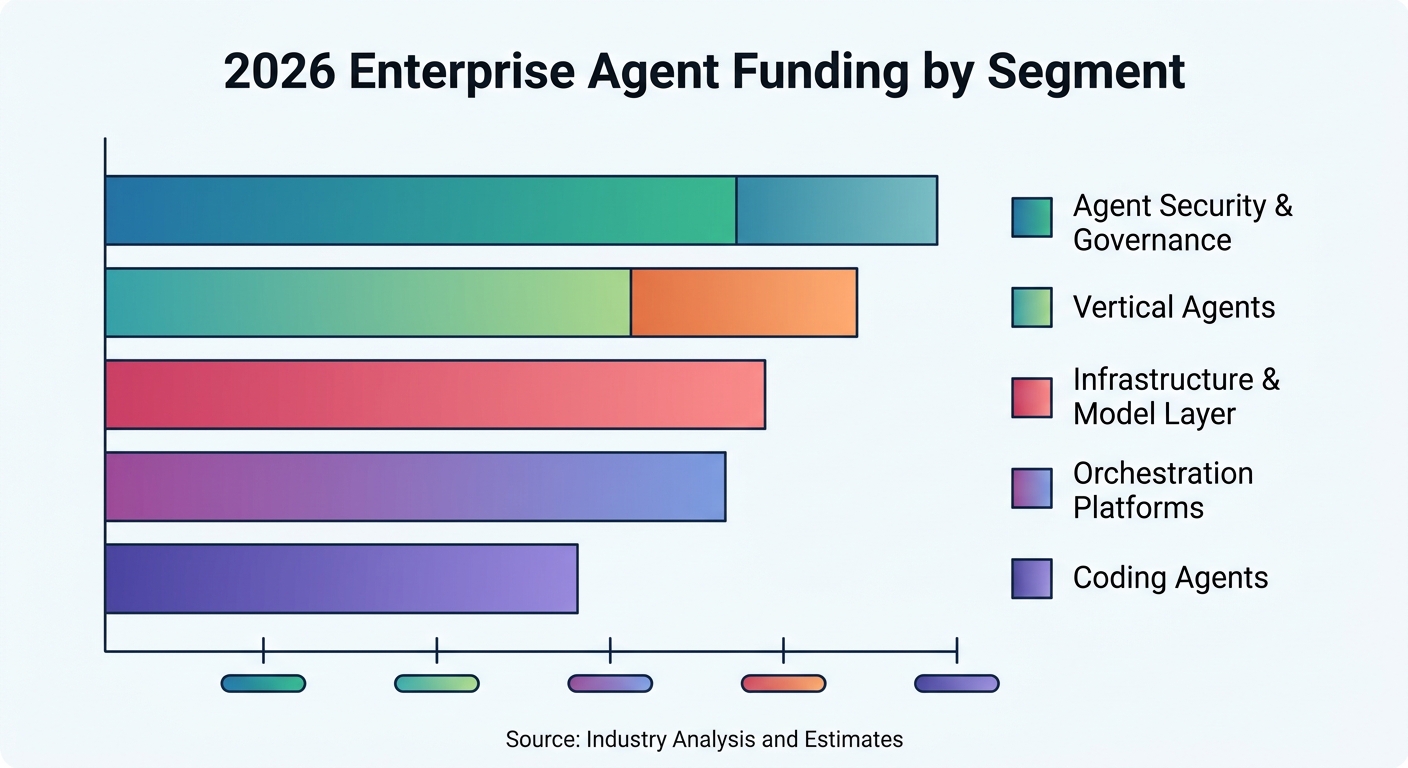
Market analysts put the enterprise agent opportunity in a wide estimated range of $12–15 billion for 2026. The exact number matters less than the direction: capital is flowing into this category at a pace few technologies have matched.
What Capital Influx Signals About the Market
A funding wave of this size is not just a pile of money. It is a set of signals about where the market is heading.
The category is validated. When disciplined investors back multiple companies in one space, they are betting the category becomes durable. The 2026 funding wave — validates — the enterprise agent category. Buyers no longer need to defend the premise that autonomous agents will matter to the enterprise.
Consolidation is coming. Capital rarely stays spread evenly for long. Well-funded leaders buy or outcompete smaller players. Capital concentration — signals — an imminent market consolidation. For an IT buyer, that means the vendor landscape you see today will not be the one you see in two years. Plan for change.
Value is concentrating in specific layers. The funding is not uniform. The largest, most meaningful rounds cluster in security and governance, vertical agents, and infrastructure. That distribution tells you where durable competitive value sits.
Key insight — Security and governance are attracting the biggest structural rounds in 2026. When investors fund risk management as heavily as the agents themselves, the message to buyers is clear: build oversight into your plan from day one.
Where the Money Is Concentrating
Security and governance startups — attract — the largest structural rounds. Zenity's $125 million round follows similar raises for agent access-control and identity startups. Inline-secure the agent traffic, and the market rewards you. This is the clearest signal that enterprise buyers are asking "how do we control this?" not just "how do we build it?"
Vertical agent startups — target — legal, health, and finance workflows. Harvey (legal) and Rogo.ai (finance) sit in this group. Domain-specific agents monetize faster than generic ones because they pair clear value with measurable outcomes.
Infrastructure and the model layer form the third cluster. Prime Intellect and Instinct build the rails that other agents run on. This is the picks-and-shovels play, and it tends to be more stable than betting on any single application.
What It Means for IT Buyers — From Noise to a Playbook
Here is where the story turns practical. Funding is useful information, but it is not a verdict. A well-funded vendor can still underdeliver. A modest vendor can outlive a hyped one.
An agent is not more reliable just because its parent company raised capital. IT buyers — should treat — funding as a due-diligence input, not a shortcut to a decision.
Start with the fundamentals. Ask about real product maturity, not press releases. Put the vendor's roadmap in writing. Check whether the architecture works inside your environment, behind your firewall, with your data.
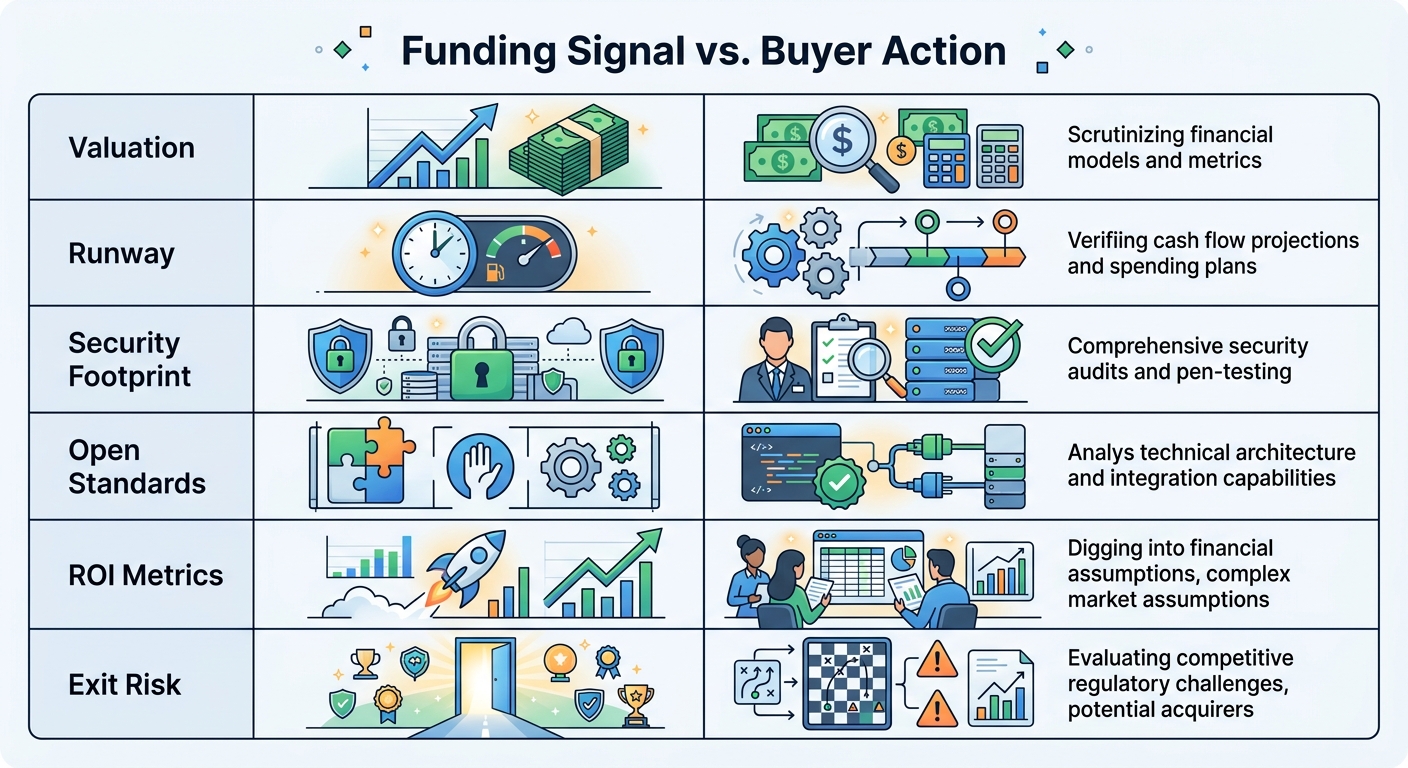
Then prepare for the worst case. A startup that raised $200 million can still pivot away from your use case. Ask two questions before you commit to anyone: can I get my data out, and can I run this elsewhere if it fails? The answer to both should be yes. Vendor lock-in — is reduced by — open standards and data portability.
This is also the moment to negotiate hard. Vendor competition is intense and capital is abundant. That combination favors the buyer. Push for clear SLAs, predictable pricing, and contract terms that protect you if priorities shift.
Avoiding the Funding Bubbles: Security, ROI, and Hype
A funding wave creates its own pressure to buy. Resist it. Momentum is not a reason to skip the hard questions.
Set ROI metrics that mean something. Agent ROI — must separate — real value from vanity metrics. Early agents often produce impressive demos and thin results. Distinguish real value — reduced cost per resolved ticket, faster time-to-market, fewer manual handoffs — from vanity metrics like "tasks completed in a sandbox." Measure against your baseline, not against the demo.
Budget for governance from the start. The security funding boom is a hint that control systems are not optional extras. They are core infrastructure. Include agent monitoring, access control, and audit trails in your cost model, or your pilot becomes a liability.
Watch for the gap between funding and traction. A high valuation is a forward-looking claim, not proof of use. Verify that customers are actually deploying agents in production, not just testing them.
Key insight — In 2026, the ratio of funded startups to production deployments still leans heavily toward funded. Buy meaningful pilots, and let results — not round sizes — set your budget.
The Bottom Line for Your 2026 Budget
The 2026 funding wave is real, and it reshapes the enterprise agent market in your favor. Capital validates the category, triggers consolidation, and concentrates durable value in security and vertical applications. Your job is to convert that signal into disciplined buying.
Pilot small. Negotiate hard. Keep your data portable. And build governance into the design, not as an afterthought.
If you want to track how this market evolves — which vendors survive the consolidation, which segments deliver real ROI, and how agent economics shift quarter to quarter — subscribe to Algorithmine. We follow the funding, the technical depth, and the practical deployment reality so your next agent decision is based on signal, not hype.
Expert Q&A
Q: Does a big funding round mean an agent vendor is safe to bet your enterprise on? A: No. Funding is a signal about investor sentiment and runway, not about product quality or operator reliability. A $200 million round gives a vendor cash to spend, but it does not guarantee the agent works inside your firewall, meets your compliance bar, or stays focused on your use case. Treat funding as one due-diligence input. Combine it with architecture review, reference calls, security audits, and a contract that protects data portability. A salvageable worst case matters more than a flashy valuation.
Q: Which agent segments received the most venture funding in 2026, and why should that steer my roadmap? A: Security and governance lead the largest structural rounds, followed by vertical agents (legal, health, finance) and infrastructure/model-layer plays. The security weighting is the strongest strategic hint: investors are betting that control, access, and observability are where durable value sits. For your roadmap, that means you should plan governance as core infrastructure from the start — monitoring, access control, audit trails — rather than bolting it on after a pilot. Vertical-agent funding also suggests you should look for domain-specific agents that pair with clear, measurable outcomes instead of generic tooling.
Q: What are the most common mistakes IT buyers make when a market heats up like this? A: Three mistakes stand out. First, treating funding as a proxy for maturity and skipping real technical due diligence. Second, measuring ROI with vanity metrics, like demo task counts, instead of baseline comparisons against your own cost per outcome. Third, ignoring portability and locking yourself into a vendor that pivots away from your use case. The counter to all three is discipline: run a small, meaningful pilot, define metrics against your baseline, and write contracts that guarantee data export and clear exit terms before you scale.
Q: How does the security funding boom change what I should evaluate in an agent vendor? A: It raises the bar on what counts as a production-ready agent. Because risk management is now a funded, competitive category, you can and should demand real control surfaces from any vendor you consider: agent activity monitoring, role-and-policy-based access control, audit trails, and inline guardrails on what agents can do. If a vendor's security story is "we'll add it later," that is a red flag, regardless of how much they raised. Bake governance requirements into your selection criteria and your cost model.