The 2026 Agentic AI Startup Shakeout: Which Funding Models and Business Cases Actually Survive
2026 is being called the "year of AI consolidation" — and the label is doing a lot of contradictory work. The surface numbers look euphoric. Global startup funding hit a record $510B in H1 2026,
2026 is being called the "year of AI consolidation" — and the label is doing a lot of contradictory work. The surface numbers look euphoric. Global startup funding hit a record ~$510B in H1 2026, with AI capturing over 70% of Q2 venture dollars. If you only read the headlines, this looks like the healthiest fundraising environment in history.
It is not. The same year that set funding records also triggered the worst culling in AI history. Roughly 3,800 AI agent startups shut down in 2025 and another ~1,800 in early 2026, and industry analysts expect fewer than one in ten AI startups to remain independent by the end of the year.
The jarring part — and the thing most coverage misses — is that these two trends are not separate stories. They are one story. Capital concentrated so hard into a handful of proven winners that the funding spigot for everything else effectively shut off. I've spent this year watching that dynamic play out deal by deal, and the pattern is clear: the survivors are not defined by how much they raised, but by which funding model and which business case they chose. This article walks through both, and gives you the framework for deciding where to build or bet.
The Shakeout in Numbers
Before the strategy, the arithmetic. The failure wave is measurable, and its root cause is specific.
- 88% of AI pilots never reach production, at an average sunk cost of ~$7.2M per abandoned large-enterprise initiative.
- Over 40% of agentic AI projects are predicted to be canceled outright.
- Only about 18% of organizations actually track AI ROI — meaning more than four in five have no idea whether their AI investment is paying back.
- 68–79% of enterprises experienced AI cost overruns in the past year, and 80–85% missed their AI infrastructure forecasts by more than 25%.
Now connect those dots, because they explain why the numbers are what they are. Agentic AI runs on tokens, and its runtime cost grows with autonomy. A simple chatbot is cheap and bounded. An autonomous agent that plans, calls tools, re-injects context, and refines its output burns an order of magnitude more tokens — and the bill climbs the more responsibility you hand it.
So you have a perfect cancellation loop: costs ballooning with autonomy, and only ~18% of buyers able to prove any return. When companies cannot track ROI and cannot control costs, they cancel. And that cancellation wave washes straight through the startups whose unit economics never made sense in the first place.
The root cause is not lack of interest. It's cost bloat with no proof of value. The shakeout is a reckoning for business models built on enthusiasm rather than economics.
Why Capital Concentration Explains the Paradox
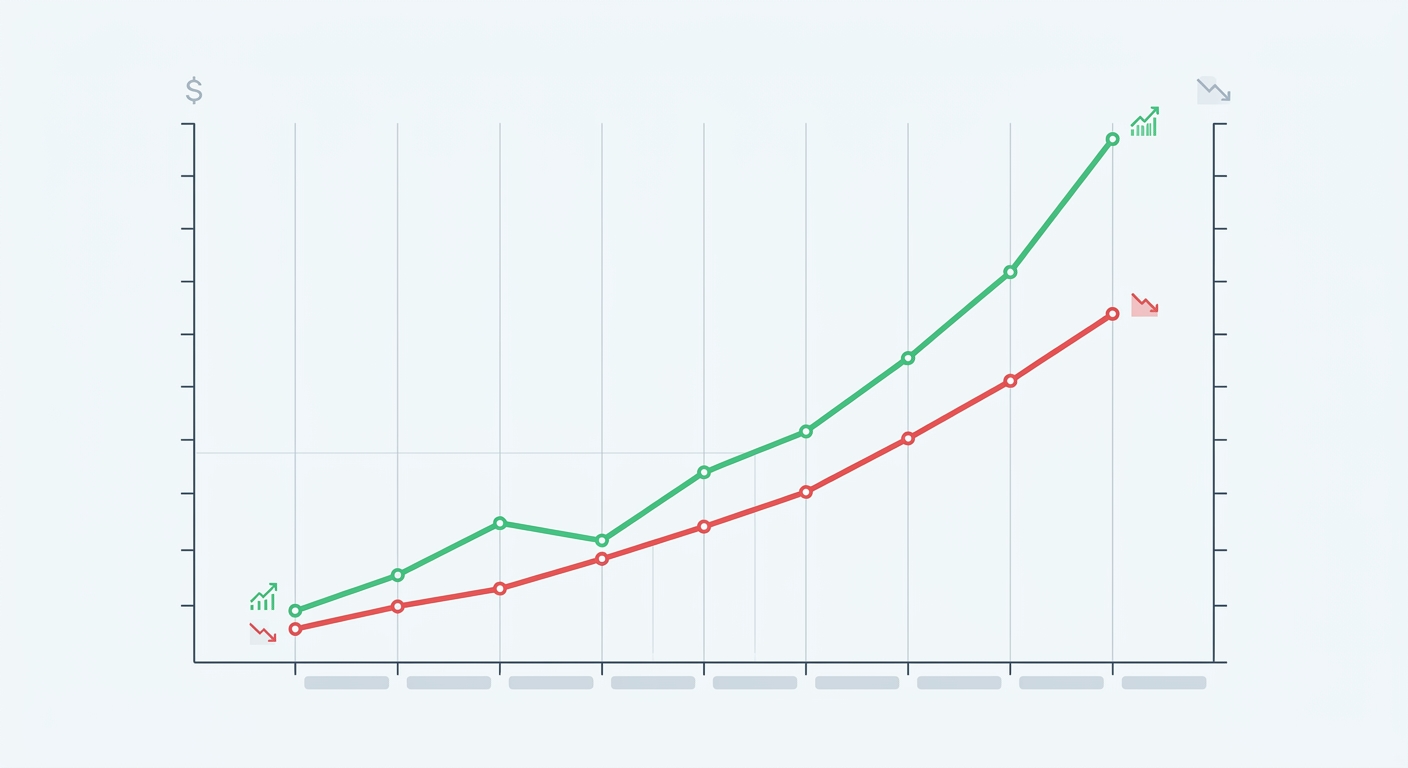
It is easy to read the record funding and the record culling as contradictory facts. They are the same mechanism seen from two angles. As venture dollars concentrated into a handful of proven platform winners — OpenAI, Anthropic, and the hyperscalers — the marginal dollar that used to keep dozens of "promising" startups alive instead flowed into a few. Funding records and shutdown records rise in parallel precisely because capital is a winner-take-most game in 2026. Understanding that single mechanism is why the rest of this framework holds together: the question is no longer how much money is in the system, but where the survivors sit relative to that concentrated flow.
The Hard Truth: Fewer Than 1 in 10 Make It
Digest the survivor math honestly: roughly one in ten AI startups remains independent by end-2026. For founders reading this, the message is uncomfortable but clarifying — raising is not surviving.
In a boom, a mediocre value proposition can coast on momentum. Not in 2026. When capital tightens behind proven leaders, the market stops funding "promising." It funds "proven." The startups that endure against those odds keep repeating three survival patterns, and they show up again and again across every vertical I've tracked:
- Vertical beats horizontal. One industry, one buyer, one workflow — not "AI for everything."
- Infrastructure beats thin applications. Owning the security, governance, and runtime layer outlasts owning a feature.
- Outcome pricing beats seat licenses. Charging for value delivered, not for users seated.
I'll unpack each. These three recurrences are not a coincidence; they are the market's selection criteria, and they give you a decision framework instead of a doom metric.
Vertical Beats Horizontal: The Business Case That Survives
The clearest signal in the whole shakeout is vertical specialization. Vertical AI agents — built for a single industry, a single buyer, a single workflow — deliver on average ~2.3x the ROI of general-purpose LLM deployments, and many see first-year ROI above 300%.
The margin story is just as stark: vertical agents command 3–10x higher margins and 3–5x better retention than horizontal tools. The reason is structural, not magical. A vertical agent embeds into an existing operational ecosystem and exploits proprietary data — a law firm's contract corpus, a hospital's billing patterns, an insurer's claims history. That deep integration creates switching costs a horizontal tool can never match.
The market has already voted with its wallet. Vertical AI agents attracted 82.64% of all capital raised in the agentic segment in the past year — the single clearest signal of where investors believe durability lives. The proven verticals read like a map of where real money moves: legal (Harvey, at a $5B valuation), customer service (Sierra, $10B), enterprise search (Glean, $7.2B), and coding (Cognition's Devin, $2B).
The framing that matters: vertical agents replace labor and own the outcome; horizontal agents supplement software and diffuse the value. In a capital-starved, ROI-obsessed year, only the former clears the bar.
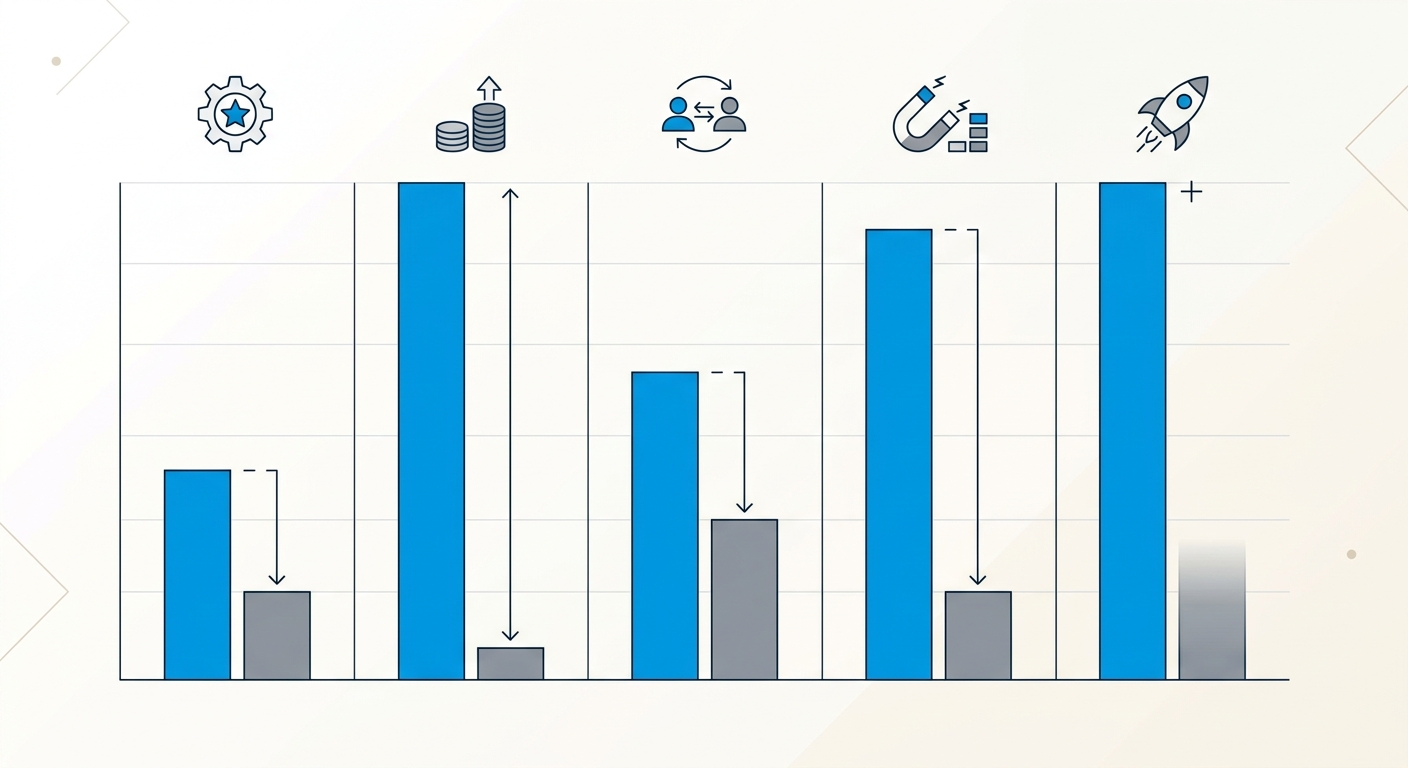
This is why horizontal "AI for everything" startups are the segment paying the price. Their value is diffuse — it spreads across every use case and lands on no single revenue or cost line, so it fails the ROI test. High attrition, runaway cost overruns, and "shadow AI" governance problems pile on top. Horizontal generality is not a bug in good times; in 2026 it is a terminal condition.
The Contrarian Play: Agent Infrastructure as Picks-and-Shovels
If every collapse story is an application story, the contrarian case is the inverse: own the layer beneath the apps. "Picks-and-shovels" — a strategy of selling the essential tools that every player in a market needs, rather than competing with them — means betting on the infrastructure everyone depends on regardless of who wins above.
As agents become more autonomous, enterprises panic — not about model quality, but about security, permissions, testing, runtime control, observability, and governance. Let a fleet of agents act on your systems and the first question your security team asks is not "is the LLM smart?" It is "what can these agents touch, and who audits them?"
That panic is a business. Agent infrastructure — the security, governance, cost-control, and observability layer that makes autonomous agents safe and auditable — profits regardless of which agent vendor ultimately wins. The model wars can end in any direction and the infrastructure toll-taker still collects.
This is the picks-and-shovels position of the shakeout, and it is exactly the profile that attracts acquirers. Startups that are model-agnostic, embeddable, and defensible in the infrastructure layer become prime M&A targets — because an acquirer can plug that capability into its own stack without betting on your application layer surviving. In a consolidation year, "who can I acquire that de-risks my platform" beats "who has the coolest demo" every time.
Funding Models That Actually Work in 2026
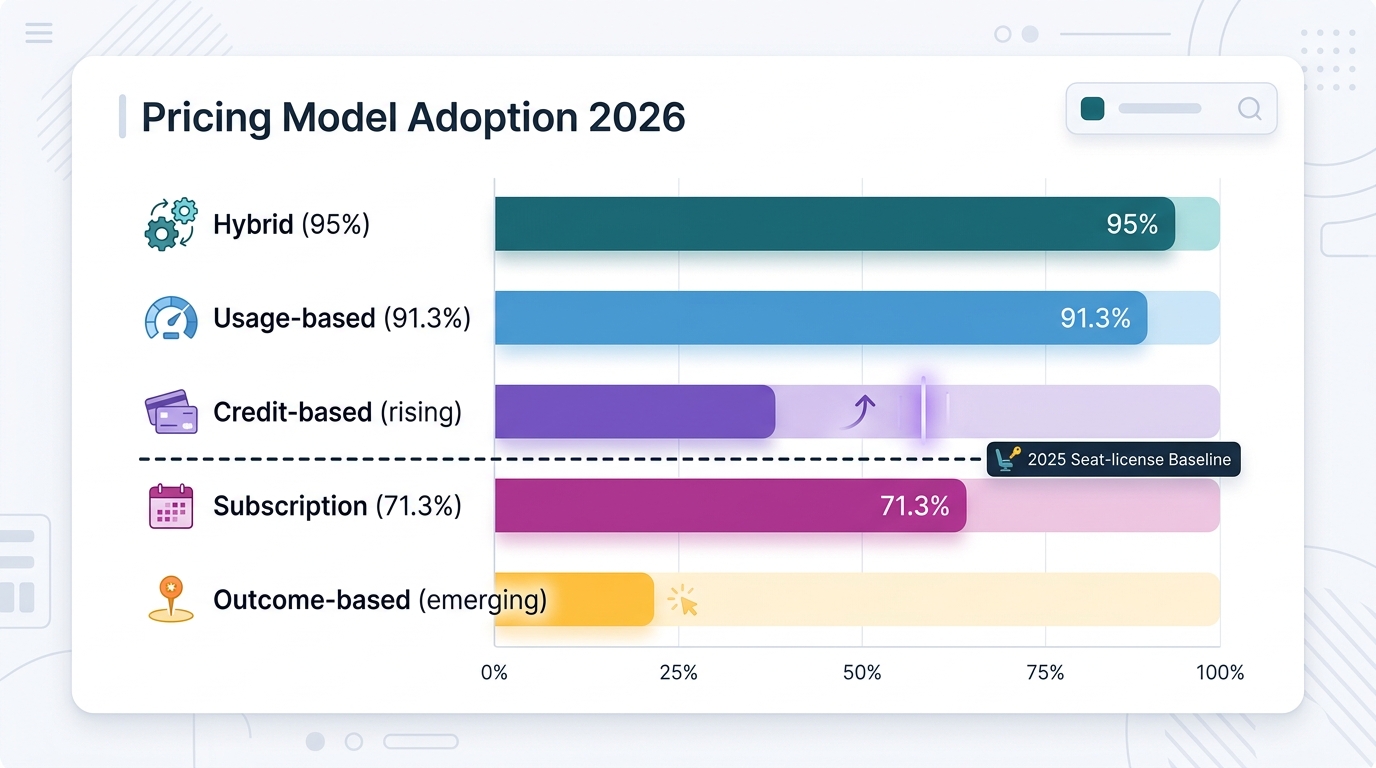
Survival is as much about how you charge as what you build. The pricing data from 2026 shows the market migrating decisively from seats to value:
| Pricing Model | Adoption | Why it matters |
|---|---|---|
| Hybrid (subscription + usage) | 95% of AI agent companies | Flexibility with a predictable revenue floor |
| Usage-based | 91.3% | Ties cost to tokens, calls, and outputs |
| Credit-based | Rising to dominant | Flexible across products, users, and agents |
| Subscription | 71.3% | Revenue floor, almost always paired with usage |
| Outcome-based | Emerging | Pay per resolved issue / end-to-end result |
The unifying thread: pricing is aligning cost with demonstrated value, not with occupied seats. And there's a sharp price divergence underneath it. Sophisticated agents that automate high-value, end-to-end work are trending up in price, while basic chatbots and legacy enterprise SaaS trend down. The differentiated business case is charging for outcomes owned, not seats occupied.
The same logic governs what attracts — and repels — capital in 2026:
Attracts: vertical specialization, proprietary data, model-agnostic integration, demonstrated ROI tracking, and agent-governance infrastructure.
Repels: horizontal generality, low switching costs, no ROI proof, runaway token costs, and weak enterprise trust.
If you are raising right now, read those two lists as a due diligence checklist. The market is asking a single question in a hundred ways: can you prove, in dollars, that what you built is worth what you charge?
The Giants Moving Down-Stack: OpenAI Frontier and Anthropic Cowork
There is a final accelerant to the shakeout that founders ignore at their peril: the platform owners themselves are moving into the startup lane. This is not a looming threat. It is happening now, from two directions at once.
OpenAI Frontier, launched in February 2026, is an enterprise platform for building, deploying, and managing AI agents — positioned, in OpenAI's own framing, "like managed employees," with governance, context, coordination, and performance evaluation built in. Critically, it is open and can manage agents built with any provider. That makes it a management and orchestration layer that commoditizes point-solution startups: if a platform can wrangle every vendor's agents, what is the strategic value of a thin, single-purpose agent startup on top of it?
Anthropic is applying downward pressure from the opposite direction, doubling down on Cowork and Plugins to embed intelligence directly into legal, finance, engineering, and design workflows — specialization aimed precisely at the vertical niches where startups have been thriving.
The squeeze: a thin, undifferentiated agent startup now loses to the giants on both fronts — the platform layer (OpenAI Foundation) and the vertical layer (Anthropic Cowork) at the same time. If you cannot differentiate on workflow ownership or proprietary data, you are squeezed out of the middle entirely.
This is why the survivors are increasingly either meaningfully vertical — where proprietary data beats a generalist plugin — or infrastructural — where being model-agnostic makes you the neutral toll-taker beneath the giants, not their competitor.
The Survival Playbook
For founders and builders deciding where to commit, here is the checklist that separates the ~1-in-10 from the rest in 2026:
- Pick one ugly, regulated, high-backlog workflow where generic tools fail — contracts, billing, claims, compliance — and own the proprietary data in it.
- Be model-agnostic, so a platform shift (OpenAI ↔ Anthropic ↔ open-source) never strands your product.
- Price on outcomes, not seats, and make sure your revenue model visibly tracks the ROI you deliver.
- Use or become the infrastructure layer — agent security, permissions, testing, governance, cost control — and ride consolidation as a toll-taker.
- Track and publish ROI as a differentiator, when more than four in five enterprises cannot.
- Position as embeddable and defensible, because in a consolidation year most survivors exit via M&A, not independence.
- Keep runtime cost per task visible and low — token bloat and budget overruns are the number-one cancellation trigger in the market.
Your Due-Diligence Gate
Before you fund or commit to any agentic startup in 2026, run it against five yes/no gates. Does it own a single high-value workflow? Does it control proprietary data that raises switching costs? Can it survive a provider shift without breaking? Can it prove ROI in dollars today? And does its pricing scale with delivered value rather than seats? A company that clears all five fits the niche-survivor economy. A company that fails three or more is the horizontal "promising" startup the current market is actively culling.
Conclusion: The Two-Speed Market
Step back and 2026 resolves into a two-speed market with two very different economies running side by side.
On one side is the capital-incumbent economy: OpenAI, Anthropic, and the hyperscalers capturing the platform, orchestration, and governance layers — plus 43% of all deployed venture dollars in H1 2026. On the other is the niche-survivor economy: capital-efficient vertical agents and agent-infrastructure startups that own a single high-value workflow, price on outcomes, and either sustain a defensible niche or get acquired.
The horizontal, "AI for everything" startup is the segment paying the price of the shakeout. The market's verdict is unambiguous: in a capital-starved, ROI-obsessed year, the funding model that survives is concentrated, vertical, outcome-priced, and infrastructure-backed — and the business case that survives is the one that owns a high-value outcome in a single industry.
If you are building or funding in this market and want implementation-focused research on agentic AI business models, funding strategies, and the infrastructure that survives consolidation, subscribing to the portal keeps you ahead of the wave. The teams that choose the right business case and funding model now will be the ones still standing — and still independent — when the shakeout settles.
Expert Q&A
Q: A friend's "AI for sales" startup just raised a big round. Is that the kind of company that survives, or is it exactly what's getting culled?
A: It depends entirely on which of two shapes it actually is. If it is an "AI for anything that looks like sales" horizontal wrapper on a general LLM — thin, no proprietary data, no single embedded workflow — it is precisely the segment the market is culling, regardless of the headline round. If it is a sales-ops-for-one-industry engine that owns a specific workflow (say, quote-to-contract for mid-market manufacturing) and the proprietary data inside it, it is a vertical survivor. The tell is switching cost: can the customer leave without ripping the tool out of a live process? If a demo impresses but nothing is embedded, treat the round as momentum, not durability.
Q: We're a horizontal agent platform and we know we're exposed. Is it too late to pivot to a vertical?
A: As long as you are still cash-positive or able to raise a bridge, no — but the window is closing, and the pivot has to be surgical, not cosmetic. Pick one ugly, regulated, high-backlog workflow (contracts, billing, claims, compliance) where generic tools fail, go deep on the proprietary data there, and reprice on outcomes rather than seats. The worst move is a rebrand that keeps the same diffuse product. Investors in 2026 ask a single question: can you prove in dollars what you're worth? If your new vertical can show one embedded customer with a repeatable ROI number, you have a real shot at being bought rather than shuttered.
Q: Everyone is telling me to build agent infrastructure as "picks-and-shovels." Isn't that also over-funded by now?
A: It is crowded at the thin end — observability dashboards and basic guardrails are commoditizing fast. The part that still has room is the layer agents actually need once they touch real systems: permissions and least-privilege enforcement, testing across non-deterministic runs, cost control per task, and audit/governance trail. That is hard, model-agnostic plumbing, and it is exactly the profile acquirers buy to de-risk their platform rather than to bet on an app surviving. The moat is defensibility and embeddability, not "we're an infra company." If you cannot answer "what happens to my customers' spend when a provider shifts," rework it before raising.
Q: How do I realistically compete when OpenAI and Anthropic are both moving down into my niche?
A: Stop competing on the layer they're commoditizing. OpenAI Frontier is a model-agnostic orchestration layer and Anthropic Cowork embeds into vertical workflows — that squeezes thin, undifferentiated agents on both fronts. You survive in one of two ways. Either go deeper vertical than a generalist plugin can reach, where your proprietary data is the moat (the giants can't easily bolt on your claims corpus or contract history), or go infrastructure underneath both, where being model-agnostic makes you the neutral toll-taker rather than their competitor. If you're neither meaningfully vertical nor infrastructural, you are sitting in the exact middle that is being squeezed out.
Q: We're deciding between subscription pricing and usage-based. What's the data saying for a 2026 agent product?
A: The 2026 data says most successful companies don't pick — they pair. Hybrid (subscription + usage) leads at ~95% adoption, and usage-based sits at ~91%, with subscription at ~71% almost always as a floor underneath usage. Pure subscription seat-licensing is the model in decline, because buyers stop trusting it when agent token spend is unbounded. The winning shape is: a predictable base (subscription or credits) plus a usage component that visibly tracks tokens delivered, and — the differentiator — pricing that rises for high-value, end-to-end outcomes rather than flat per-seat fees. Charge for outcomes owned, not seats occupied, and make the runtime cost per task visible and low. That is the exact combination the market is rewarding.
Q: What is the single highest-signal check before I fund an agentic startup?
A: Run the five-gate due-diligence test and see how many it clears. One: does it own a single high-value workflow? Two: does it control proprietary data that raises switching cost? Three: can it survive a provider shift without breaking (model-agnostic)? Four: can it prove ROI in dollars today, not a roadmap? Five: does pricing scale with delivered value rather than seats? A company clearing all five is the ~1-in-10 niche survivor. Failing three or more puts it in the horizontal "promising" bucket the market is actively culling. I'd weight gate four hardest — in a year where only ~18% of enterprises can even track AI ROI, the startup that can show a dollar-figure return to a buyer is the one that wins the deal.
FAQ
Why does 2026 set funding records and cull startups at the same time? Capital is concentrating into a few proven platform winners, so the marginal dollar that once kept many "promising" startups alive now flows to a handful. Funding and shutdown records rise in parallel because the market is winner-take-most.
What separates the ~1-in-10 AI startups that survive? Three patterns recur across every survivor: vertical beats horizontal (one strong workflow), infrastructure beats thin apps (owning the security/governance layer), and outcome pricing beats seat licenses (charging for value delivered).
Why do vertical AI agents outperform horizontal "AI for everything" startups? Vertical agents embed into one industry's workflow and exploit proprietary data, creating switching costs and commanding 3–10x higher margins and ~2.3x the ROI. Horizontal agents diffuse their value across use cases, fail the ROI test, and get culled.
What is the "picks-and-shovels" play in this shakeout, and why does it attract acquirers? It means owning the agent infrastructure layer — security, governance, cost control, observability — that every agent vendor needs regardless of who wins above. Model-agnostic, embeddable infrastructure is the profile acquirers buy to de-risk their platform.
Which pricing models survive in 2026, and what should a founder build around? Hybrid (95% adoption) and usage-based (91.3%) lead, with credit- and outcome-based models rising. The unifying shift is pricing to demonstrated value rather than occupied seats — charge for outcomes owned, not seats seated, and keep runtime cost per task visible.