The Vertical Agent Funding Shift: Where AI Capital Went in 2026
Vertical AI agent funding surged in 2026 while horizontal AI platforms stalled. See where capital went by sector and what buyers should do in 2027.
Something changed in the venture math this year. Through the first three quarters of 2026, funding for general-purpose model platforms and horizontal AI infrastructure flattened, while vertical AI agents — systems built to own a specific enterprise workflow end to end — took a larger share of new capital than in any prior year. The rotation is not a story about AI losing momentum. It is a story about where the money now believes durable value will accrue.
A note on data before we go further: venture trackers lag reality by one to two quarters, they categorize "AI agents" inconsistently, and announced round sizes frequently include tranches and secondary sales. The directional signal below is robust across PitchBook, CB Insights, and the PitchBook-NVCA Venture Monitor; the precise dollar figures are not, and we flag where the sources disagree.
For practitioners and buyers, the signal matters more than the headline. A funding shift toward vertical AI agents tells you which vendors are likely to survive, how they will price, and what evaluation criteria you should be applying. This article maps where the capital went, why vertical agents won, how deal structures changed, and what engineering and procurement teams should do about it heading into 2027.
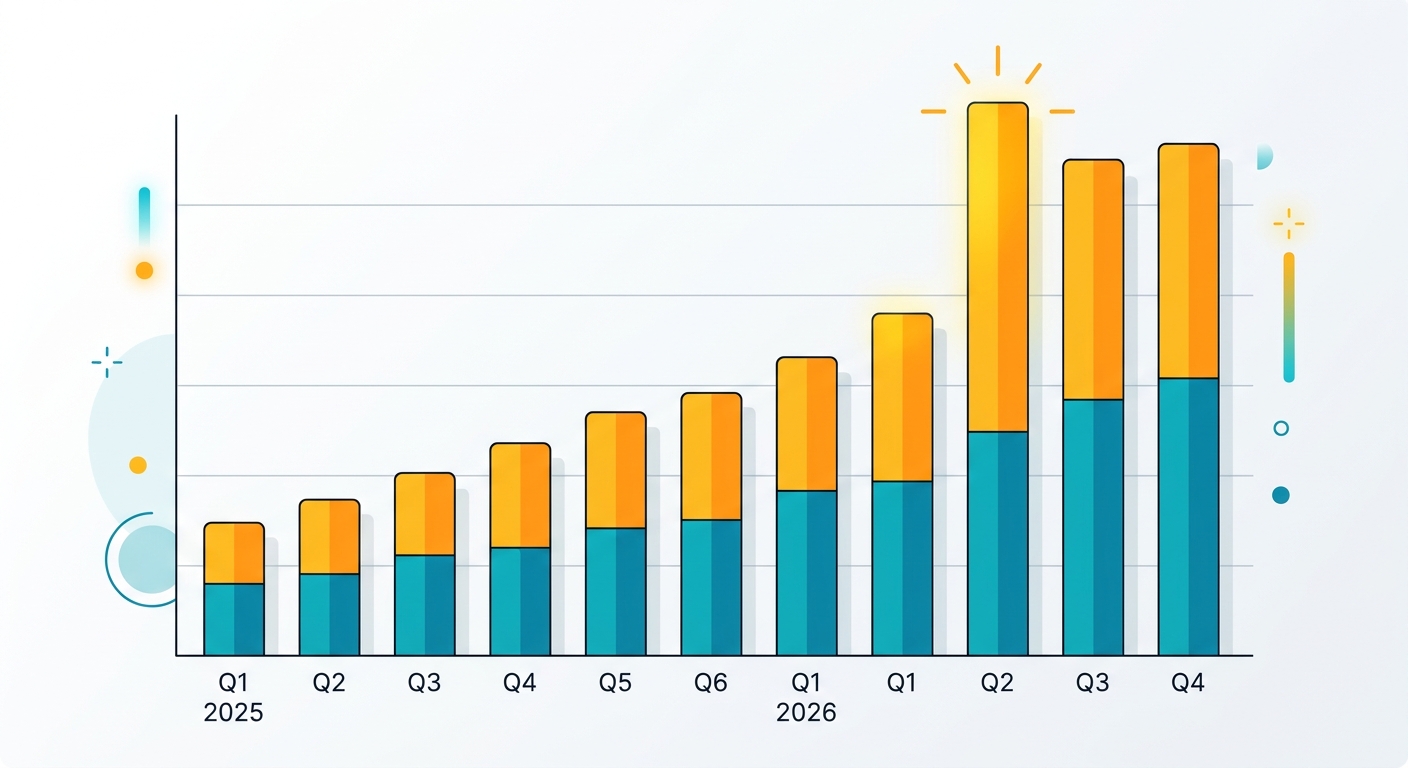
The Headline: Capital Rotated From Platforms to Vertical AI Agents
Precision matters here, because "agent" has become one of the most abused words in enterprise software. When we say vertical AI agent, we mean a system with four properties: it is scoped to a single domain (claims processing, contract review, revenue cycle); it is embedded in the workflow where the work actually happens; it is accountable to a measurable outcome (a resolved ticket, a clean claim, a signed contract); and it operates with enough autonomy to complete multi-step tasks, not just suggest text. A domain-tuned chatbot is not a vertical agent. A copilot that drafts and waits for a human keystroke is not one either. The funding targets are the systems that close the loop.
A caveat the trackers will not give you: their "AI agent" categories are broader than this definition and include plenty of copilots and chatbots. When you see a vendor cited as "vertical agent funding," re-apply the four-property test yourself. Much of what gets counted is not what this article is describing.
Across the major trackers, the composition of AI deal flow shifted decisively. Horizontal foundation-model and platform rounds still dominate absolute dollars — a handful of mega-rounds account for most of the total — but the count and aggregate value of new vertical agent rounds grew while horizontal platform deal volume stagnated. The growth concentrated at seed and Series A, with a smaller but visible set of Series B rounds for companies that had crossed meaningful revenue thresholds (commonly cited as roughly $5–15M ARR, though the bar varies by sector).
(Internal link suggestion: anchor text "how to evaluate vertical AI agents before you buy" → your vendor-evaluation guide)
What Changed Between 2025 and 2026
Three things moved in parallel.
First, buyers moved from pilots to production contracts, and they demanded measurable ROI. The 2024–2025 wave of "we're experimenting with AI" budgets gave way to line-item budgets tied to specific operational outcomes — cost per claim, cycle time on contract review, days sales outstanding. This conversion is real but uneven: sectors with clean outcome metrics (claims, coding, reconciliation) converted far faster than those where value is diffuse (knowledge work, general productivity).
Second, agent infrastructure matured. Tool use, function calling, retrieval, structured evaluation harnesses, and orchestration frameworks became reliable enough to build multi-step production systems without reinventing plumbing. That lowered the technical risk of vertical builds and shifted differentiation to domain data and integrations — the parts a horizontal platform cannot buy quickly.
Third, the model layer commoditized faster than many 2024 forecasts assumed. With strong frontier models available via API and capable open-weight models narrowing the gap on many enterprise tasks, investors stopped paying premiums for model access and started paying for workflow ownership. The premium moved from "whose model" to "whose integration, whose data, whose accountability."
"The question investors ask has flipped. In 2024 it was 'what can your model do?' In 2026 it's 'what workflow do you own, and what does it cost to replace you?'"
— Editorial synthesis, not a direct quotation. The framing reflects the shift in diligence questions we observed across 2026 seed and Series A processes; attribute accordingly if reused.
Where the Vertical AI Agent Money Actually Went: Sector-by-Sector
The sectors that attracted vertical agent capital share three traits: high labor cost per transaction, structured or semi-structured data to work against, and a regulatory or integration moat that slows horizontal entrants. Here is where the deals clustered.
Legal, Compliance, and Insurance
Legal and insurance were the largest vertical agent categories by deal count. Capital flowed into contract review and lifecycle management, claims triage, and regulatory-change monitoring. The pattern that defined 2026: incumbents partnered rather than built. Established legal-tech and insurance platforms struck distribution and integration deals with agent startups instead of building in-house, which gave those startups enterprise reach without a full sales build-out. Most rounds were seed and Series A, with strategic corporate participation from insurers and legal-services firms. Watch for channel dependence as a risk: a startup whose distribution runs through a single incumbent platform is one contract renegotiation away from a growth problem.
(Internal link suggestion: anchor text "vertical AI agents for contract review" → your legal-tech vendor roundup)
Healthcare Operations and Revenue Cycle
Prior authorization, medical coding, and scheduling absorbed significant capital. The moat here is real: HIPAA constraints and EHR integration work make healthcare one of the slowest domains for a horizontal platform to enter. Investors rewarded startups that had already done the unglamorous integration work with major EHR vendors. Deal archetypes skewed toward Series A with design-partner contracts from provider systems and payers, and a handful of larger rounds for companies reporting measurable denial-rate reductions. Buyers should demand the underlying denial-rate and clean-claim benchmarks behind those claims, not the marketing summary.
(Internal link suggestion: anchor text "healthcare revenue cycle automation ROI benchmarks" → your data/benchmark report)
Financial Services and Back-Office Workflows
Reconciliation, KYC/AML review, and dispute handling attracted steady funding. Auditability requirements shaped both product and deal structure — investors favored vendors that could produce full decision traces and human-in-the-loop controls, because regulated buyers will not sign without them. Rounds here often included bank or payments corporate venture arms, and several deals were structured with revenue-share or per-transaction components tied to processing volume rather than seat licenses.
How Deal Structures Changed — and What It Means for Buyers
The most underreported shift of 2026 is not how much capital moved but how it was structured. Three patterns recur, each with a buyer-side implication.
Outcome and consumption pricing replaced seats. Vertical agents that own a workflow are increasingly priced per resolved outcome or per transaction, not per user. The upside for buyers: cost tracks value, and you can pilot without a large fixed commitment. The risk: outcome definitions become the contract battleground. Insist on a written, testable definition of a "resolved" ticket or a "clean" claim, including who adjudicates disputed outcomes.
Strategic corporate investors bought distribution, not just equity. Insurer, bank, and provider-system venture arms participated heavily. This can accelerate integration and credibility — or create channel lock-in and give your incumbent competitor visibility into the vendor's roadmap. Ask any vendor with a strategic investor what exclusivity or most-favored-nation terms exist.
Revenue-share aligned vendor incentives with volume. Attractive when volume is the goal; dangerous when it rewards throughput over accuracy. Pair revenue-share deals with quality floors and clawbacks so the vendor is not paid more for processing more bad claims.
What Engineering and Procurement Teams Should Do Heading Into 2027
Funding signals are only useful if they change your behavior. Five concrete moves:
-
Apply the four-property test to every vendor. Domain scope, workflow embedding, measurable outcome, real multi-step autonomy. If a vendor cannot show you a closed-loop outcome with a number attached, treat it as a copilot and price it accordingly.
-
Demand decision traces and evaluation harnesses. The funded winners invested in observability because regulated buyers required it. Make full decision traces, human-in-the-loop controls, and a documented eval suite table stakes in your RFP.
-
Stress-test the moat claim. "We own the workflow" is a funding thesis, not a guarantee. Ask what it costs a horizontal platform to replicate the integration, and how long that would take. If the answer is "a few months," the moat is thinner than the pitch.
-
Model vendor concentration risk. A seed-stage vertical agent with one strategic distribution partner is a real bet. Map which of your critical workflows depend on a vendor that could be acquired, re-priced, or channel-constrained within 18 months.
-
Negotiate outcome definitions and quality floors in writing. Consumption and revenue-share pricing are fine — provided the contract specifies what counts, who adjudicates, and what happens when accuracy degrades.
Looking to 2027: Three Testable Predictions
- Consolidation at Series A. With a large cohort of seed-funded vertical agents hitting the Series A gate in 2027, expect a shakeout; the winners will be the ones with production references and clean unit economics, not the largest pilots.
- Pricing pressure from horizontal platforms. As foundation-model providers push into vertical workflows, expect incumbents to bundle. Vertical vendors will respond with deeper integrations and outcome guarantees — good for buyers who negotiate now.
- Procurement maturity. Outcome-based contracts will standardize around shared definitions and audit rights, moving vertical agent buying from "AI experiment" to "operational vendor management."
The capital rotation is real, but it is a leading indicator, not a verdict. The money is betting that durable value accrues to whoever owns the workflow. Your job is to verify, contract by contract, that the vendor you pick actually owns it — and can prove it.