AI Startup Funding Report Q2 2026: $18B Invested Across 340 Deals
June 11, 2026 | Category: Industry News
Introduction: The AI Investment Engine Keeps Running
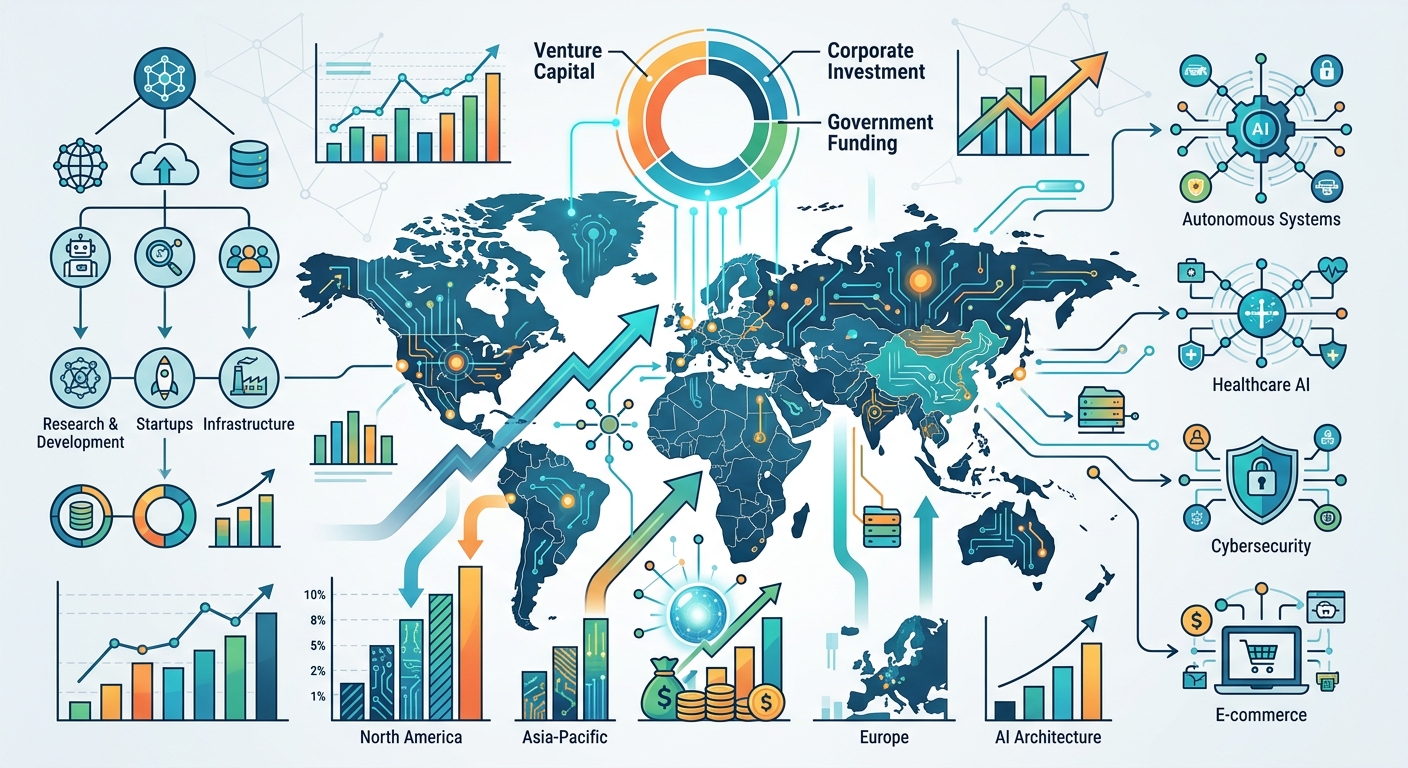
Artificial intelligence startups closed the second quarter of 2026 with $18 billion in total funding across 340 disclosed deals, according to aggregate data compiled from PitchBook, Crunchbase, and public filings. That figure represents a 20% increase over Q1 2026's $15 billion and a 35% year-over-year jump from Q2 2025's $13.3 billion, underscoring continued investor appetite for AI-native businesses even as public market multiples have compressed.
The quarter was defined by two intersecting trends: a hardening of capital toward proven AI infrastructure and agent platforms at the expense of early-stage horizontal experiments, and a geographic broadening that saw European and Asia-Pacific AI hubs capture their highest combined share of global AI deal volume on record.
Sector Breakdown: AI Infrastructure Dominates, AI Safety Rises
Capital allocation across AI verticals in Q2 2026 concentrated heavily in four areas:
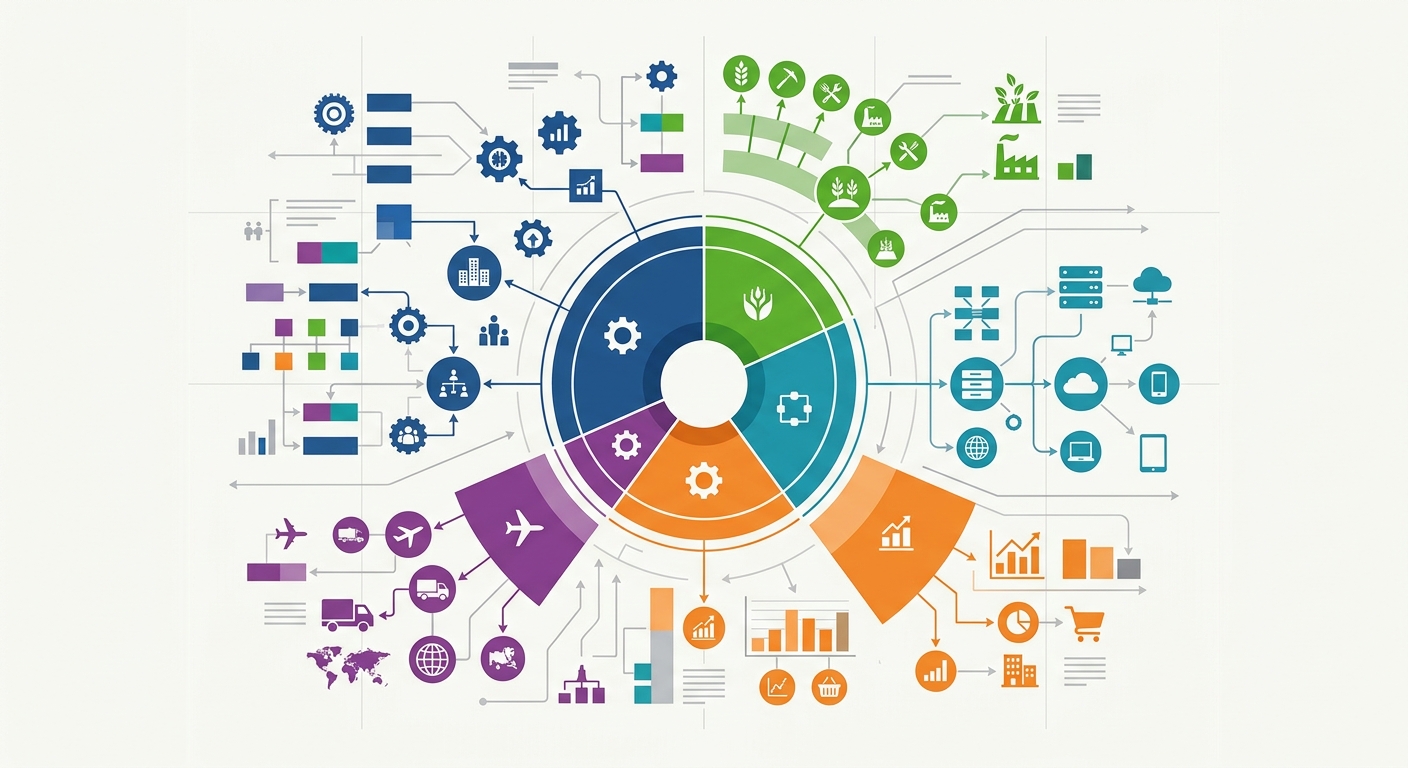
AI Infrastructure captured the largest share at approximately 35% of total deal value, or roughly $6.3 billion. This category encompasses model training acceleration, cloud orchestration, API platforms, and developer tooling. The outsized share reflects continued fear-of-missing-out among investors who watched NVIDIA's market cap compound at 40% annually and want exposure to the picks-and-shovels layer of the AI stack before it matures. Notably, infrastructure deals skewed toward later stages — the median infra round in Q2 was $180 million, compared to $45 million for application-layer startups.
Enterprise AI Applications drew approximately 28% of capital, or $5 billion. This vertical covers vertical SaaS businesses embedding LLMs into workflows in legal, healthcare, finance, and operations. Deal velocity here remained high but average check sizes shrank slightly from Q1, suggesting investors are rotating from category-creation bets toward businesses demonstrating repeatable revenue.
AI Safety and Alignment emerged as a distinct and growing category, capturing roughly 15% of total funding at approximately $2.7 billion. This represents a dramatic jump from approximately 6% of AI deal volume in Q2 2025. The increase reflects both genuine scientific progress and regulatory pressure, as the EU AI Act and proposed US AI Governance frameworks create compliance tailwinds for safety-first vendors.
Generative AI Applications accounted for approximately 12% of funding at $2.2 billion. Average deal sizes fell from $80 million in Q1 to $55 million in Q2, a signal that investors are growing more selective about which application-layer bets warrant outsized checks.
Robotics and Embodied AI rounded out the top five at approximately 10% of deal value, or $1.8 billion.
Notable Mega-Rounds: Where the Big AI Funding Money Flowed
Eight AI startups raised $180 million or more in Q2 2026, collectively accounting for $2.9 billion — roughly 16% of all AI funding in the quarter.
1. NeuralScale — $850M Series C
NeuralScale led all AI infrastructure rounds with an $850 million Series C co-led by Sequoia Capital and Andreessen Horowitz. The company's hardware-software co-design platform reduces LLM training costs by a claimed 60%. NeuralScale's valuation reached $8.5 billion post-money.
2. Verticall AI — $600M Series B
Verticall AI raised $600 million in a Series B led by General Catalyst and Tiger Global, valuing the enterprise AI platform at $5.2 billion. Verticall specializes in deploying customizable LLM-based workflows for Fortune 500 operations teams.
3. Cognition Labs — $400M+ at $6B Valuation
Cognition Labs closed a $400 million-plus round at a $6 billion valuation, led by Founders Fund, to scale its autonomous coding agent Devin.
4. Anysphere — $250M Series C
Anysphere, the company behind AI coding assistant Cursor, raised $250 million in a Series C at a $2.5 billion valuation, with Andreessen Horowitz as lead.
5. Helsing AI — $220M Series B
Helsing AI raised $220 million in a Series B from Balderton Capital. Helsing's AI stack is deployed across several NATO member armed forces.
6. Physical Intelligence — $200M Series B
Physical Intelligence secured $200 million in a Series B, co-led by Greenoaks and Lux Capital, for its general-purpose robotics foundation model.
7. Writer — $200M Series C
Writer closed a $200 million Series C from SPAR Capital, bringing its total funding to $310 million at a $1.9 billion valuation.
8. Augment Code — $180M Series B
Augment Code raised $180 million in a Series B from Insight Partners, at a reported $1.4 billion valuation.
Geographic Distribution: The US Leads, but the World Is Catching Up
The United States captured approximately 68% of deal volume at $12.2 billion. Silicon Valley and New York together accounted for 54% of US deal value.
The United Kingdom and broader European Union captured approximately 18% of global AI funding, or $3.2 billion — the highest combined share on record. Paris-based Mistral AI continued to attract institutional interest ahead of a potential IPO.
Asia-Pacific represented approximately 10% of global AI deal volume at $1.8 billion, led by Singapore and South Korea.
The remaining 4% was distributed across Latin America, the Middle East, and Africa.
Emerging AI Investment Themes in Q2 2026
AI Agents for Enterprise Workflows attracted over $800 million in mega-rounds. Autonomous agents that complete multi-step tasks are drawing investors for their usage-based pricing potential and high switching costs once embedded in enterprise workflows.
AI Safety as a Regulated Vertical evolved from academic concern to investable category, with companies offering model auditing, red-teaming, and EU AI Act compliance tooling seeing strong investor interest.
Multimodal AI startups building natively across text, image, audio, and video saw increased deal activity. Early-stage deals averaged $35 million.
Vertical AI continues attracting capital for domain-specific solutions in healthcare, legal, and financial services.
Investor Spotlight: Top VCs Shaping AI Startup Funding
Andreessen Horowitz led all AI investors by deal count in Q2 2026 with 28 AI-related investments, followed by Sequoia Capital with 22 and 红杉中国 with 18.
Prosperity7, the growth-stage venture arm of Saudi Aramco, made three AI infrastructure investments totaling approximately $400 million. Sovereign wealth funds from Norway, Abu Dhabi, and Singapore collectively deployed an estimated $1.1 billion into AI startups.
Key Takeaways and H2 2026 AI Investment Outlook
Q2 2026 data paints an AI investment landscape that is simultaneously maturing and broadening. AI infrastructure and agent platforms continue to command premium valuations. Geographic diversification and the emergence of AI safety as a recognized vertical suggest the ecosystem is expanding beyond Silicon Valley.
For H2 2026:
- Valuation discipline is likely to tighten in the application layer
- AI infrastructure consolidation may begin in earnest with larger players acquiring point solutions
- Regulatory clarity from the EU AI Act will create winners and losers in AI safety tooling
- Geographic expansion — particularly in Southeast Asia and the Middle East — may produce new AI unicorns by year-end
Expert Q&A
Q: Why did AI infrastructure capture 35% of all AI funding in Q2 2026, and is this concentration sustainable?
A: AI infrastructure's 35% share reflects a rational risk allocation by investors who have watched the AI application layer become crowded and commoditized faster than expected. When investors can't easily pick winners at the application layer, they naturally gravitate toward the enabling layer — compute, tooling, and platforms that every AI application company depends on. Three structural factors sustain this concentration: more predictable recurring revenue models than early-stage AI applications, extreme talent concentration creating genuine moats, and demonstrated willingness by hyperscale customers to pay premiums for performance improvements. Infrastructure concentration is likely to peak in 2026–2027, but it remains the most defensible allocation in the AI stack for the next 18–24 months.
Q: The EU and UK captured 18% of global AI funding — their highest share on record. What's driving European AI startup momentum?
A: Three converging forces are at work. First, the EU AI Act has paradoxically attracted investment by creating a compliance framework that sophisticated investors believe will favor established, safety-conscious European AI companies over global competitors. Second, European AI research institutions have produced a disproportionate share of foundational AI research, and founders from these institutions are attracting institutional capital at much earlier stages than five years ago. Third, the 2025–2026 vintage of European AI-focused venture funds has matured to actively deploy, reducing dependency on US cross-over investors who historically required US-based revenue metrics.
Q: AI agents attracted over $800 million in Q2 2026 mega-rounds alone. Is the autonomous agents thesis fundamentally different from previous AI hype cycles?
A: The AI agents thesis is meaningfully different because the value proposition is concrete and measurable — an AI coding agent can demonstrably reduce senior engineer time on boilerplate code by 30–50%, which translates directly into measurable ROI. Second, AI agents have a natural usage-based pricing moat: once embedded in a company's codebase and workflows, migration costs are high, giving agents companies more durable subscription economics. Third, the capability threshold for agents crossed a practical boundary in mid-2025, with new agent architectures making multi-step reliability practical for real enterprise workflows. Q3–Q4 2026 usage metrics and enterprise renewal rates will determine whether the thesis is validated or overwritten.
Frequently Asked Questions
Q: How much did AI startups raise in Q2 2026? A: AI startups raised approximately $18 billion across 340 disclosed deals in Q2 2026.
Q: Which AI sector received the most funding in Q2 2026? A: AI infrastructure captured approximately 35% of total deal value, or roughly $6.3 billion.
Q: Which AI startup raised the most funding in Q2 2026? A: NeuralScale led with an $850 million Series C, valuing the company at $8.5 billion post-money.
Q: Which country received the most AI startup funding in Q2 2026? A: The United States captured approximately 68% of global AI deal volume at $12.2 billion.
Keywords: AI startup funding 2026, AI venture capital Q2 2026, AI unicorns 2026, AI investment trends, AI funding rounds
Category: Industry News | Section: news | Category ID: 8
Featured Image: https://api.algorithmine.com/api/images/2dd47ebd9f604dc6b557c19e8f8101be Secondary Image: https://api.algorithmine.com/api/images/00e01368a96b42b499c7fb4f63329c2b Slug: ai-startup-funding-q2-2026 Published: 2026-06-11