DSPy vs LangChain vs PydanticAI: Choosing an Agent Framework in 2026
Compare DSPy, LangChain, and PydanticAI for US teams. Learn which AI agent framework fits your bottleneck—quality, integration, or type safety—in 2026.
The 2026 Agent Framework Decision
Three frameworks, three philosophies, one production decision. That is the state of agent development in 2026, and it is why "DSPy vs LangChain vs PydanticAI" keeps surfacing in architecture reviews. None of these tools is a popularity contest entry anymore. Each has a real production story, a real user base, and a distinct opinion about how agents should be built.
The confusion comes from the word "framework." It now spans at least three different jobs. LangChain (and its graph runtime, LangGraph) is fundamentally an orchestration and integration layer—it wires models to tools, data, and stateful workflows. DSPy is a programmatic optimization system—it compiles LLM programs against metrics instead of hand-tuning prompts. PydanticAI is a typed agent construction kit—it brings validation-first Python design to agent I/O and dependencies.
That distinction matters because the wrong comparison leads to the wrong purchase. Teams that benchmark these frameworks on feature checklists miss the actual question: what is your bottleneck? If it is integration breadth, LangChain wins. If it is output quality and measurable iteration, DSPy wins. If it is type safety, validation, and maintainability for a Python team, PydanticAI wins.
This article breaks down each philosophy, compares these AI agent frameworks head-to-head, and gives you a decision framework you can take into your next architecture meeting. (See also: How to Evaluate an LLM Agent Framework Before You Commit)
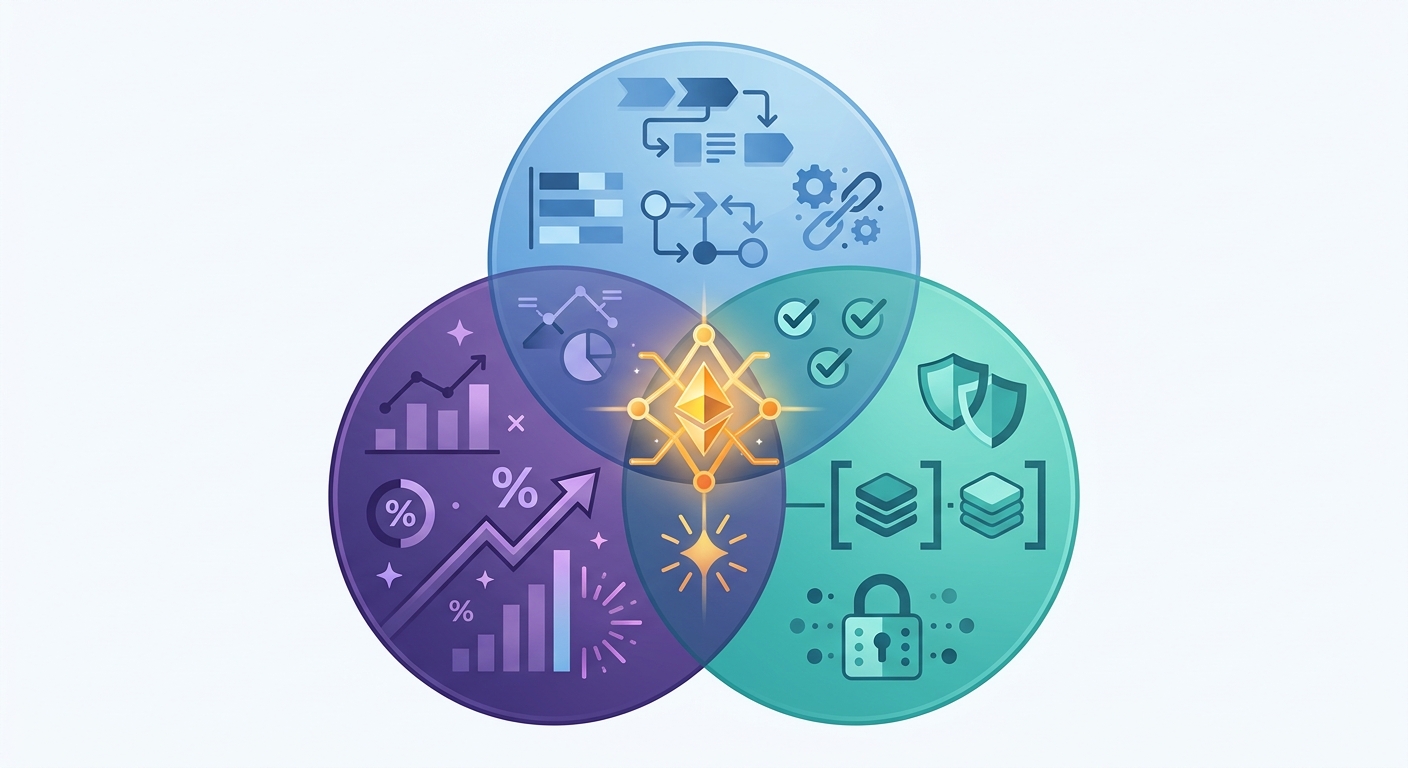
The 2026 Agent Framework Landscape
What Changed Since 2024
The biggest shift is ecosystem convergence—partial but real. The Model Context Protocol (MCP) has become a credible common interface for exposing tools and data to models, and shared observability conventions (OpenTelemetry-style tracing, structured logs) have made frameworks more interoperable than they were two years ago. You are less locked into one vendor's tool format by default than you were in 2024. That said, adoption is uneven: framework-native tool schemas still differ, and portability is a realistic expectation for interfaces more than for optimized behavior. A DSPy program tuned for one model, or a workflow leaning on provider-specific features, still carries migration cost.
The second shift is maturity. LangChain's early abstraction churn has largely settled, and the serious path for stateful agents now runs through LangGraph—a separate product with its own primitives (graph state, checkpointers, human-in-the-loop interrupts) that many teams use without the classic chain abstractions. DSPy has moved from research curiosity to a tool with production users who report measurable quality gains. PydanticAI arrived later but inherited the credibility of the Pydantic ecosystem, which already underpins validation across much of the Python AI stack.
The third shift is buyer sophistication. Engineering leaders now ask about evaluation, observability, and cost per task, not just "does it support function calling." That favors frameworks with a clear answer to "how do I know it works?"
Three Philosophies, Not Three Versions of the Same Tool
Think of it this way:
- DSPy treats prompts as parameters to be optimized, not artifacts to be written.
- LangChain treats agents as compositions of interchangeable components you assemble, and LangGraph as an explicit state machine you control.
- PydanticAI treats agents as typed Python objects with validated inputs, outputs, and dependencies.
These are not competing implementations of one idea. They are different answers to "where should the complexity live?" DSPy puts it in the optimizer. LangChain puts it in the graph. PydanticAI puts it in the type system. (Related: Where Complexity Lives in Your Agent Architecture)
DSPy: Programming, Not Prompting
Core Model
DSPy's core insight is that hand-written prompts are brittle and unmeasurable. Instead, you define signatures—declarative input/output specifications like "question → answer" or "context, question → cited answer." You compose those signatures into modules (predictors, retrievers, reasoning steps). Then you run an optimizer—the component DSPy's early docs called a "teleprompter," a name you'll still see in older tutorials—that automatically searches for better instructions and demonstrations to maximize a metric you define.
You are not writing prompts. You are compiling a program against a metric. The optimizer families matter here: few-shot bootstrapping optimizers (e.g., BootstrapFewShot) select and synthesize demonstrations; instruction-search optimizers (e.g., MIPROv2-style) tune the natural-language instructions themselves; and reflective/evolutionary approaches (e.g., GEPA) iterate on prompts using feedback from failures. If your metric is answer accuracy on a labeled dev set, DSPy searches the space of prompts and demonstrations to improve it. Change the model, re-run the optimizer, and the program adapts.
Where DSPy Wins
- Quality optimization at scale. When you have an eval set and a metric, DSPy turns prompt engineering into a repeatable optimization loop.
- Model portability. Optimized programs can be recompiled for a different model, which reduces the pain of switching providers—though the recompile itself is real work.
- Measurable iteration. Every change is tied to a metric, which is exactly what production teams need to justify decisions.
Where DSPy Costs You
DSPy has real conceptual overhead. Signatures, modules, and optimizers are a new mental model, and teams accustomed to editing prompt strings need time to adjust. Optimizer runs also cost time and tokens—compilation is not free, and large search spaces can get expensive. More importantly, the optimizer is only as good as your metric and dev set. A weak or unrepresentative eval set produces a confidently overfit program; DSPy rewards teams that have already invested in evaluation.
The integration ecosystem is smaller than LangChain's, and DSPy is less "batteries included" for app plumbing like state management, retries, and UI hooks. You will often pair it with other tools for the surrounding application. (See also: Prompt Optimization vs Prompt Engineering: What Actually Scales)
"DSPy changes the question from 'did you write a good prompt?' to 'did your program beat the baseline on your metric?' That is a fundamentally more defensible way to ship." — a common practitioner framing, and a fair summary of the framework's value proposition.
LangChain: The Integration and Orchestration Layer
Core Model
LangChain's model is composition. You build chains of components—models, prompts, retrievers, tools—and orchestrate them. For stateful, multi-step agents, LangGraph is the modern path: an explicit graph of nodes and edges with persistent state and checkpointing, which makes complex agent loops inspectable, resumable, and controllable, including human-in-the-loop interrupts.
The value proposition is breadth. LangChain offers integrations across a very large range of models, vector stores, retrievers, and tool providers, plus a mature ecosystem of observability and evaluation tooling. If your problem is "connect this model to these twelve systems and keep the whole thing observable," LangChain has the shortest path from zero to working.
Where LangChain Wins
- Integration breadth. The largest catalog of model, data, and tool connectors of the three.
- Stateful orchestration. LangGraph's explicit graph, persistence, and interrupt model is well suited to multi-step, long-running, human-in-the-loop agents.
- Ecosystem and hiring. Abundant examples, community answers, and engineers who already know the mental model reduce ramp time.
Where LangChain Costs You
The breadth is also the cost. The abstraction surface is large, and the "many ways to do the same thing" problem can produce codebases that are hard to reason about. Older chain abstractions coexist with newer graph patterns, so teams should standardize deliberately—most serious 2026 shops pick LangGraph for agent logic and use the rest of LangChain selectively. Type safety is improving but is not the framework's organizing principle; validation and dependency injection are add-ons rather than the core design. (See also: LangGraph vs. Classic Chains: When State Machines Earn Their Keep)
PydanticAI: Typed Agents for Python Teams
Core Model
PydanticAI's model is the type system as the contract. An agent is a typed object—roughly Agent[Deps, Output]—where Deps is the type of your injected dependencies and Output is the validated type of the result. You declare a structured output_type (a Pydantic model), and the framework validates model output against it, retrying on validation failure rather than letting malformed data leak downstream. Dependencies are passed through a typed RunContext, so tools receive exactly the context they need with full type checking.
The design goal is to make agents feel like ordinary, well-typed Python: testable, refactorable, and legible to a team that already trusts Pydantic for its API layer. Observability integrates through Pydantic Logfire (and OpenTelemetry), giving structured traces that line up with the same validation mindset.
Where PydanticAI Wins
- Validation-first I/O. Structured outputs are the default, not an afterthought, which is exactly what you want at the boundary between an LLM and your database or API.
- Dependency injection and testability. Typed
RunContextdependencies make agents easy to unit test with fakes—rare among agent frameworks. - Maintainability for Python teams. If your stack already uses Pydantic and FastAPI, the mental model is nearly free.
Where PydanticAI Costs You
It is the youngest of the three, so the integration catalog and community corpus are smaller than LangChain's, and you may write more connector code yourself. Its opinionated typing is a strength for disciplined teams and a friction point for teams that want loose, exploratory prototyping. And it does not, by itself, give you DSPy-style optimization—structured outputs improve reliability, not necessarily answer quality. (See also: Structured Outputs and the Cost of Malformed Data)
Head-to-Head Comparison
| Dimension | DSPy | LangChain / LangGraph | PydanticAI |
|---|---|---|---|
| Primary job | Optimize prompts against a metric | Orchestrate and integrate components | Typed agent construction and validation |
| Where complexity lives | The optimizer | The graph | The type system |
| Integration breadth | Smaller | Largest | Moderate, growing |
| Optimization loop | Core feature | Manual (bring your own evals) | Manual (bring your own evals) |
| Type safety | Moderate | Improving, not core | Core design principle |
| Stateful orchestration | Minimal | Strong (LangGraph) | Basic |
| Observability | Integrates with external tooling | Mature ecosystem | Logfire / OpenTelemetry |
| Learning curve | Steepest (new mental model) | Moderate to high (surface area) | Low for Python/Pydantic users |
| Lock-in risk | Model-tuned programs need recompile | Framework abstractions | Lowest (plain typed Python) |
| Best fit | Quality-critical, eval-rich problems | Broad integrations, complex stateful agents | Maintainable, validation-heavy production agents |
How to Decide
Use the bottleneck, not the feature list:
- Choose DSPy when output quality is the binding constraint and you have—or will build—a labeled eval set and a metric. It is the right call for teams that already measure and want prompt work to become an optimization loop.
- Choose LangChain/LangGraph when integration breadth and stateful, multi-step orchestration dominate, and you need the largest connector catalog and community. Standardize on LangGraph for agent logic to avoid abstraction sprawl.
- Choose PydanticAI when correctness at the boundaries, type safety, and long-term maintainability for a Python team matter most—especially if you already live in Pydantic and FastAPI.
And remember the most common real-world answer: these frameworks compose. A PydanticAI agent with typed outputs can sit inside a LangGraph workflow; DSPy can optimize the prompt-bearing steps of an agent built with either. The decision is less "which one" than "which one owns the bottleneck, and what do the others provide around it."
Frequently Asked Questions
Can I use PydanticAI and DSPy together? Yes. DSPy can optimize the prompt-bearing modules while PydanticAI enforces typed inputs and outputs at the boundaries. They address different layers.
Is LangChain still worth it in 2026? For integration breadth and stateful orchestration, yes—particularly via LangGraph. The caution is abstraction sprawl; pick your patterns deliberately.
Which framework is best for a small team? Usually PydanticAI for maintainability, or LangChain if integration breadth is the immediate blocker. DSPy pays off once you have evaluation infrastructure.
Do I need an eval set to use DSPy? Effectively, yes. The optimizer is only as good as your metric and dev set; without them you get confident overfitting.
Which has the least lock-in? PydanticAI, because agents are plain typed Python. DSPy's optimized programs carry model-specific tuning cost; LangChain carries framework-abstraction cost.