Text-to-Video at Scale: How AI Video Generation Is Reshaping Content Production in 2026
AI video generation tools have matured rapidly, letting creators produce broadcast-quality footage from text prompts alone—reshaping workflows across marketing, film, and product development.
In early 2024, generating a coherent five-second video clip from a text description felt like a parlor trick. By mid-2026, it is routine industrial infrastructure. The transformation has been so rapid that studios, marketing agencies, and product teams are now rebuilding their content production workflows around AI video generation capabilities that did not exist two years ago. The implications for cost, speed, creativity, and IP are profound—and the race to lead the next wave of this technology is intensifying.
The Rise of Text-to-Video AI
The past 24 months have witnessed a step-change in what AI video generation can deliver. Early diffusion models produced blurry, artifact-laden clips that barely held a subject in frame. Today's systems—led by platforms like OpenAI's Sora, Runway's Gen-3, Kling, and Veo 2—can produce minute-long, photorealistic sequences with coherent motion, consistent characters, and cinematic camera work. The shift stems from three converging forces: larger multimodal language model backbones, massively scaled training on video data, and inference optimisations that make generation fast enough for production use.
Investment reflects the stakes. Global venture funding in AI video generation surpassed $4.2 billion in 2025, according to PitchBook data, with enterprise adoption growing 340% year-over-year as measured by enterprise procurement platforms. Content teams that once waited weeks for a final cut now generate, review, and iterate within a single working day.
From Prompts to Production-Ready Footage
The promise of text-to-video AI has always been seductive: describe what you want, receive a finished video. The reality in 2026 is more nuanced but no less transformative. Modern tools accept increasingly rich prompt formats—camera angles, lighting descriptions, emotional tone, character demographics, and even reference style images—giving directors and marketers genuine creative control without a physical shoot.
Production teams at major advertising networks report using AI-generated footage for A/B testing creative concepts before committing budget to live shoots. The downstream effect is a flatter cost curve: early-stage concepts that previously cost $5,000–$15,000 in pre-production are now generated for a fraction of that, with revisions delivered in minutes rather than days.
Key Technology Drivers
Three technical advances have been decisive. First, the quality of language understanding in generation models means prompts translate more faithfully into visual output—complex spatial descriptions, multi-character scenes, and sequential actions are rendered consistently. Second, temporal consistency has improved dramatically; characters and environments now maintain coherence across shots without the "dream fusion" artifacts that plagued earlier models. Third, API-first architecture across all major platforms has made AI video generation programmable at scale, enabling batch workflows and integration into existing content management systems.
How AI Video Generation Works
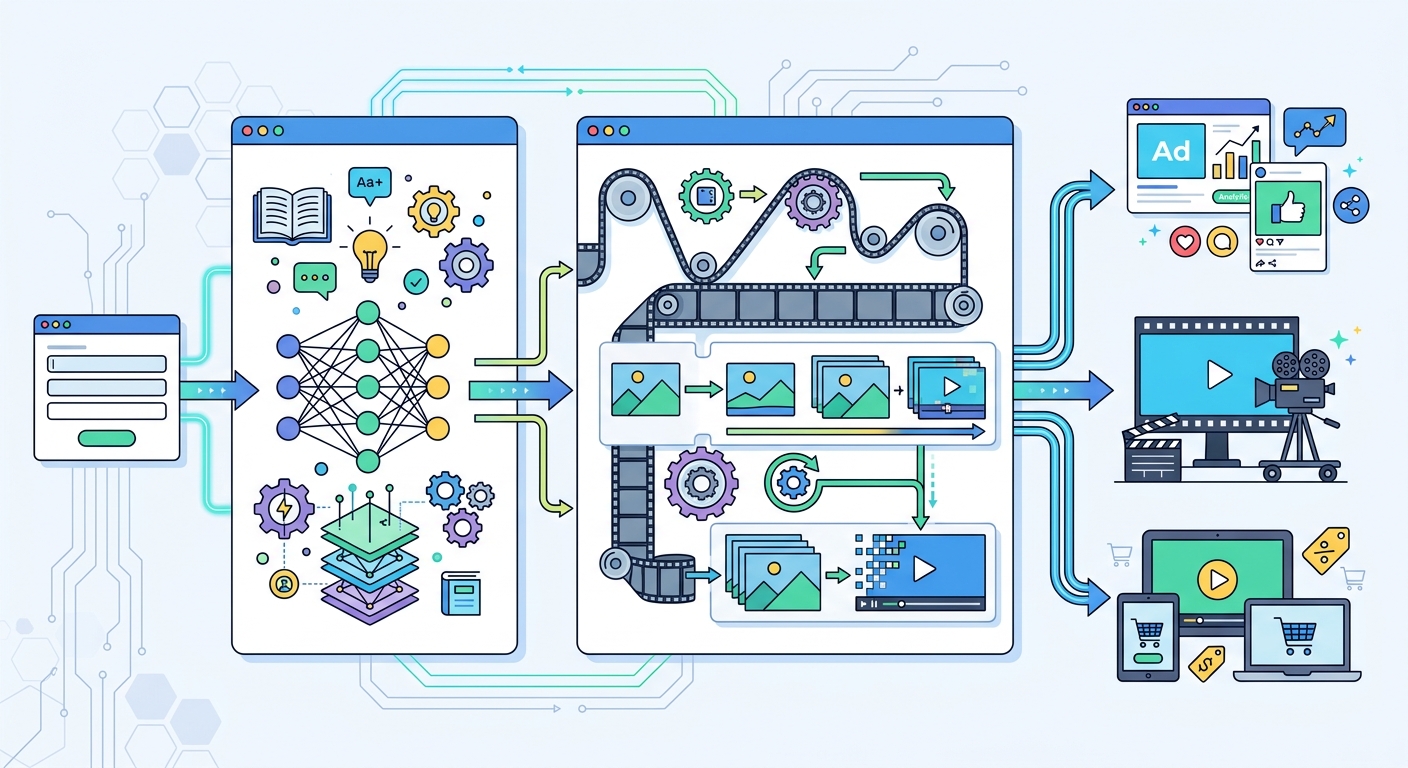
Understanding the underlying pipeline helps content teams set realistic expectations and design prompts that produce usable output.
The Multimodal Pipeline
At the core of any modern text-to-video system is a large multimodal model that has learned to关联 linguistic descriptions with visual and motion concepts. When a user submits a prompt—say, "a slow cinematic aerial shot over misty redwood forest at dawn"—the model's language encoder parses the scene description, objects, lighting conditions, camera movement, and mood. The generation backbone then synthesises frames that match, using latent diffusion or autoregressive transformer architectures depending on the platform.
Crucially, the most capable 2026 systems are not purely generative noise models. They incorporate world-modelling components that reason about physics, object permanence, and causal relationships—reducing impossible frames where characters walk through solid objects or liquids flow uphill without cause.
Quality vs Speed Trade-offs
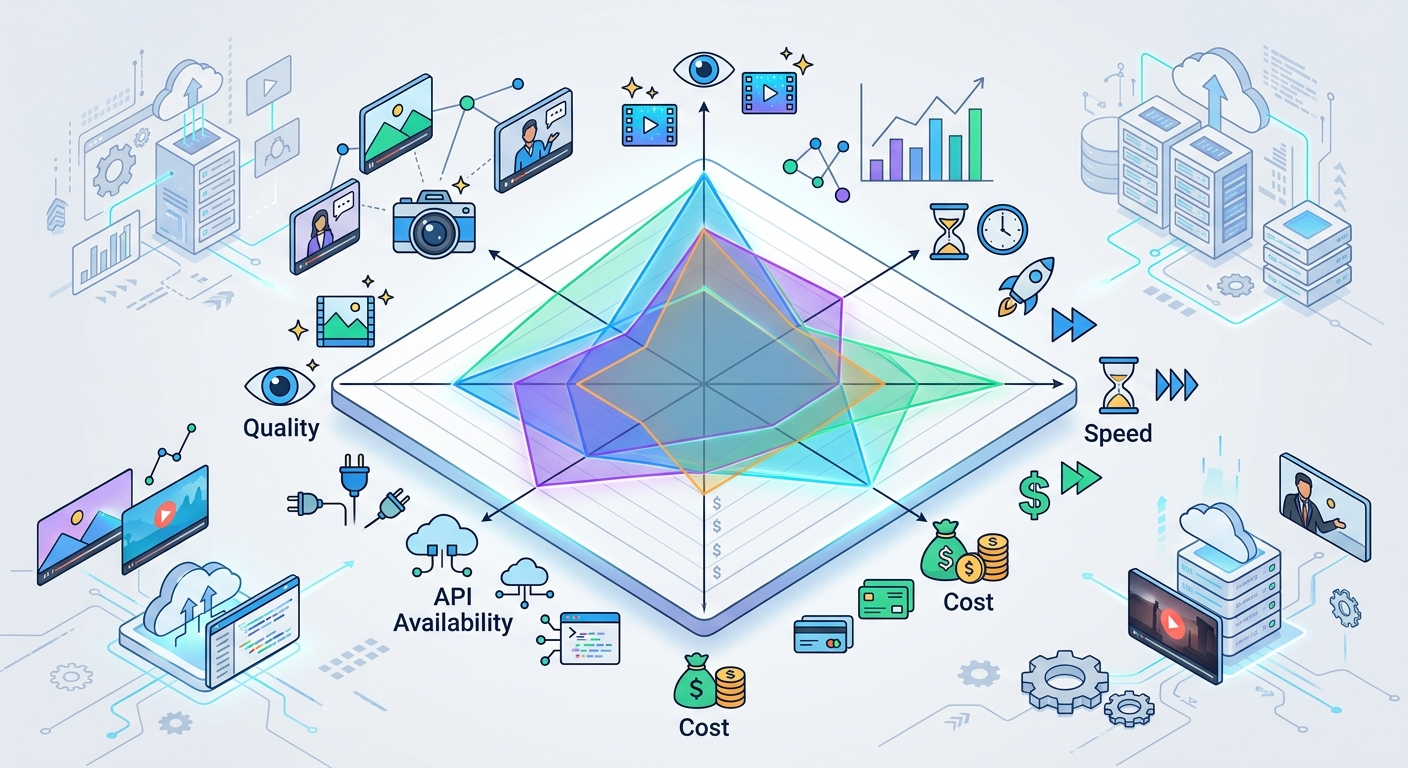
Generation time remains a meaningful variable. Real-time preview generation (sub-30 seconds for a 5-second clip at 720p) is now standard on entry-tier plans, but full-quality 4K output with extended duration can take 10–20 minutes depending on platform load. Production teams typically use rapid low-resolution previews for iterative approval cycles, reserving high-fidelity generation for final assets. This two-tier workflow has become an informal standard across the industry.
Impact on Content Production Workflows
The most consequential change is not any single technical capability—it is how AI video generation is restructuring the economics and timelines of content production across three phases: pre-production, production, and post-production.
Pre-Production: Script to Storyboard
The traditionally labour-intensive phases of ideation, storyboarding, and animatic creation have been compressed dramatically. Script-to-animatic pipelines now exist as native features in platforms like Runway and Kling, accepting a written scene description and outputting a rough animated storyboard within minutes. Directors and creative leads report that this allows them to "see the film before filming it"—identifying pacing problems, continuity issues, and narrative weak points before a single frame of footage is committed.
For marketing teams, this means creative concepts can be validated by stakeholders before any production budget is committed—a reversal of the traditional sequence where creative direction is locked early and changes become expensive.
Production: Cost and Time Reduction
The most immediate financial impact is the elimination or reduction of physical production costs. A product launch video that previously required a production crew, location rental, talent fees, and equipment can now be partially or fully generated. The degree of human involvement varies: some teams use AI footage as the primary visual content, while others generate B-roll, establishing shots, and background environments to supplement live-action footage—extending their existing productions with AI-generated elements at a fraction of traditional cost.
By the numbers: A 2026 survey of 450 mid-to-large marketing teams by Marketing AI Institute found that 68% had reduced external video production spend by at least 30% after integrating AI video generation tools, while maintaining or improving output volume.
Post-Production: Editing and Personalization
AI video generation is also transforming post-production. Tools from Adobe, CapCut, and emerging startups now integrate generation capabilities directly into editing timelines, allowing editors to extend scenes, change backgrounds, insert additional characters, or generate alternate endings from within the same environment where they complete colour grading and audio mix.
Personalization at scale—long the holy grail of video marketing—has become tractable. Brands can now generate thousands of video variants tailored to audience segments, geographies, or individual user profiles, all driven by a single source template and a data pipeline that feeds personalised text into the generation engine.
Leading Platforms and Tools in 2026
The AI video generation landscape in mid-2026 is dominated by a mix of well-funded incumbents and fast-moving challengers:
OpenAI Sora remains the reference standard for photorealistic quality, particularly for complex prompt following and cinematic camera work. Its primary limitation continues to be access and throughput—compute allocation is still tiered by subscription level.
Runway Gen-3 Alpha has carved out the professional creative community, with deep integration into editing workflows and strong controls for directors who want precise camera movement and scene composition.
Google Veo 2 benefits from DeepMind's research scale and offers compelling results for scenes requiring physical accuracy or scientific visualization. Its integration with Google Cloud makes it attractive to enterprise customers already in that ecosystem.
Kling (Kuaishou) has emerged as the value leader, offering competitive quality at significantly lower price points and with generous usage limits—particularly popular among independent creators and SMBs.
ByteDance's Jester and Meta's Make-A-Video 3 are in various stages of commercial rollout, with both companies signaling aggressive expansion plans for the second half of 2026.
Best Practices for AI Video Production
As with any powerful tool, outcomes depend heavily on how teams use it. The following practices distinguish teams getting genuine production value from those producing expensive curiosities.
Prompt Engineering for Video
Effective video prompts share several qualities. They are specific about camera mechanics ("dolly shot tracking left", "shallow depth of field at f/1.8", "slow zoom from wide to medium") rather than vague ("make it cinematic"). They describe lighting as a cinematographer would—hard shadows, golden hour warmth, overcast fill—rather than simply saying "good lighting." They establish spatial relationships explicitly ("a person walks from left to right across a kitchen island") to reduce hallucinations.
Teams that invest in prompt libraries and maintain style guides for their brand consistently outperform those approaching generation with ad hoc prompts.
Quality Control and Human Oversight
No commercial platform is immune to occasional failures: a character sprouting an extra finger, text becoming gibberish, or physics defying gravity in subtle ways. Production workflows that build in mandatory human review—particularly for any content representing a real product, service, or person—catch errors before publication. The failure modes are often subtle and pattern-distraction makes them easy to miss; review by someone who was not involved in generation is consistently more effective than review by the prompt's author.
The Future: What's Next for AI Video
The trajectory is clear: generation quality will continue to improve, latencies will fall, and integration depth with existing production tools will deepen. Three frontiers are actively being pursued by the leading labs.
Extended duration and narrative coherence is the most pressing. Current systems handle sequences of 10–60 seconds well; generating coherent multi-minute narratives with consistent characters, evolving settings, and plot arcs remains a research challenge. The approaches being explored—injecting explicit story structure tokens, maintaining longer context windows, and using world models as generation chaperones—show promise in academic benchmarks.
Interactive and responsive video, where generated footage responds in real time to viewer input or environmental data, is emerging as a commercial use case. Sports highlights, live product demonstrations, and personalized educational content are early applications where the combination of generation speed and interactivity creates new product categories.
Intellectual property and provenance frameworks are being developed in parallel. Invisible watermarking, content credentials (as pioneered by C2PA), and cryptographic signing of generation metadata are becoming standard features on all major platforms—a response to regulatory pressure and creator concerns about misuse.
Key takeaway: AI video generation has moved from experimental novelty to production infrastructure in under two years. Content teams that build fluency with prompt design, establish human review workflows, and integrate generation tools into their existing pipelines are gaining a decisive competitive advantage in speed and cost. The platforms and best practices are still maturing, but the direction of travel is unambiguous.
Expert Q&A: Text-to-Video AI Production
Q: How significant is the gap between AI-generated video quality and professionally filmed footage in 2026, and where does it show most?
A: The gap has narrowed considerably for most commercial use cases—product展示, marketing, corporate communications, and even documentary B-roll—but remains meaningful for work where physical realism, subtle emotional nuance, or precise brand representation are paramount. The biggest remaining differentiators are temporal consistency in longer sequences, accurate rendering of specific real-world products or people, and the "feel" of authentic human interaction. For pure visual spectacle or demonstrative content, the gap is functionally closed for many buyers.
Q: What are the most common legal and IP pitfalls content teams encounter when using AI video generation commercially?
A: Three issues come up most frequently. First, training data provenance—platforms have improved their disclosure, but teams using AI video commercially should obtain written representations from their tool provider that training was properly licensed. Second, character and likeness rights: generating footage of people who resemble real individuals, especially celebrities or politicians, carries defamation and right-of-publicity risk that pure generation does not eliminate. Third, output ownership clarity: most major platforms grant commercial rights to generated output, but teams should read platform terms carefully, particularly for outputs derived from reference images or style inputs.
Q: Is it realistic for a mid-size marketing team to run a fully AI-generated video workflow without any traditional production expertise?
A: Realistic, but with caveats. The tools are accessible enough that a skilled generalist can produce competent output within a few weeks of focused learning. However, "competent" and "distinctive" are different things. Teams that treat AI video generation as a craft—investing in prompt expertise, visual direction, and editorial judgment—produce markedly better results than those treating it as a push-button utility. The most effective teams pair one or two people with genuine visual storytelling sensibility with others who have the technical fluency to operationalise generation at scale.