Fine-Tuning vs RAG vs Prompt Engineering: A Practitioner's Decision Framework for Enterprise AI
A practical decision framework for enterprise AI teams choosing between fine-tuning, RAG, and prompt engineering — with cost, latency, and use case comparisons.
What Is Prompt Engineering?
Prompt engineering is the practice of crafting input instructions to guide a pre-trained LLM toward desired outputs. No model weights are changed. No external data is added. You work solely through the text you send.
The technique relies on how modern LLMs respond to structural cues. Zero-shot prompting provides a task description alone. Few-shot prompting adds example input-output pairs. Chain-of-thought prompting asks the model to reason step by step.
Prompt engineering is the fastest way to influence LLM behavior. Changes take effect immediately. There is no training pipeline to manage, no GPU cluster to provision, no dataset to curate.
The 2024 State of Enterprise AI report found that 68% of initial LLM deployments rely exclusively on prompt engineering. — Source: Databricks Global AI Benchmark Report, 2024
For formatting tasks, tone control, and straightforward question answering, prompt engineering delivers fast results. It is the entry point for any enterprise AI initiative.
When Prompt Engineering Falls Short
Prompt engineering has hard limits. Context windows are finite. A 128K-token limit sounds large until you try to fit an entire product knowledge base inside it.
Prompt engineering also cannot give the model access to proprietary data. The LLM is frozen in time. It cannot browse your internal wikis or query your CRM.
For complex, multi-step reasoning, prompts alone produce inconsistent results. The model may follow instructions today and diverge tomorrow.
When you hit these limits, you need a different approach.
What Is RAG?
Retrieval Augmented Generation combines an LLM with an external retrieval system. At query time, the system retrieves relevant documents from a knowledge base. These documents are injected into the prompt as context. The LLM generates a response grounded in retrieved material.
The retrieval system typically uses a vector database. Documents are chunked, embedded into high-dimensional vectors, and stored. At inference, the user's query is embedded and compared against stored vectors using cosine similarity. The most similar chunks are retrieved and included in the prompt.
RAG solves two core problems. First, it gives the model access to current and proprietary information. Second, it anchors responses in verifiable source documents, which reduces hallucination risk.
RAG reduces factual hallucination rates by 40–60% compared to base model prompting in enterprise knowledge Q&A tasks. — Source: AWS AI Blog, 2025
Latency is the main trade-off. The retrieval step adds 50–200 milliseconds to response time depending on vector database size and network latency.
RAG Implementation Complexity and Cost
RAG requires additional infrastructure. A vector database must be hosted and maintained. Embedding models must be selected and run. An indexing pipeline must keep the knowledge base synchronized with source documents.
Common vector database options include Pinecone (managed cloud), Weaviate (open source), Chroma (local dev), and pgvector (PostgreSQL extension). Managed solutions cost roughly $50–500 per month for typical enterprise workloads.
Embedding API costs are modest. OpenAI's text-embedding-3-large costs $0.13 per 1M tokens. For a 10,000-document knowledge base, embedding once costs about $5–20 depending on document length.
RAG is cost-effective for frequently changing data. Updating a vector index is cheap. Retraining a fine-tuned model is not.
What Is Fine-Tuning?
Fine-tuning continues the training process on a smaller, domain-specific dataset. Unlike prompt engineering and RAG, this actually modifies the model's weights. The knowledge and behavioral patterns from the fine-tuning data become baked into the model itself.
The result is a specialized model that understands your domain terminology, follows your preferred output formats, and consistently matches your brand voice. No lengthy system prompts are needed at inference time.
Three fine-tuning approaches dominate enterprise use cases. Full fine-tuning updates all model weights. LoRA (Low-Rank Adaptation) adds small trainable matrices to frozen layers. QLoRA quantizes the base model to 4-bit precision before applying LoRA adapters, reducing GPU memory requirements dramatically.
LoRA and QLoRA have made fine-tuning accessible to teams without massive GPU budgets. A QLoRA fine-tuning run on a single A100 GPU can cost $50–200 for a weekend training run.
Parameter-efficient fine-tuning methods like LoRA now account for over 80% of enterprise model customization projects. — Source: Hugging Face Enterprise Survey, 2025
Fine-tuning is appropriate when domain knowledge is stable, behavioral consistency is critical, and you have a high-quality labeled dataset of at least 1,000 examples.
Fine-Tuning Costs: GPU, Data, and Time
Fine-tuning is expensive relative to prompt engineering and RAG. GPU costs alone run $2–4 per hour for an A100 80GB instance. A typical enterprise fine-tuning run takes 4–72 hours depending on dataset size and model scale.
Data quality matters more than quantity. A 2,000-example dataset with clean labels and consistent formatting outperforms a 20,000-example dataset with noisy entries.
Tooling choices include Axolotl (open-source training framework), Unsloth (memory-optimized fine-tuning library), and Hugging Face PEFT. These tools handle distributed training, checkpoint management, and evaluation out of the box.
The hidden cost is maintenance. A fine-tuned model's knowledge becomes stale. If product descriptions change or regulations update, you must gather new data and retrain. This cycle can take weeks.
The Decision Framework — Which Method When?
Choosing the right approach starts with three questions.
Does your data change frequently? If yes, RAG is the default choice. Updating a vector index is fast and inexpensive. Retraining a fine-tuned model is not.
Do you need consistent tone, style, or output format? If yes, fine-tuning becomes a strong candidate. Prompt engineering can control these factors but requires lengthy system prompts that add latency and still produce inconsistent results.
Do you need source citations or auditability? If yes, RAG is essential. Fine-tuned models generate text that cannot be traced to specific source documents.
Use this framework as a starting point:
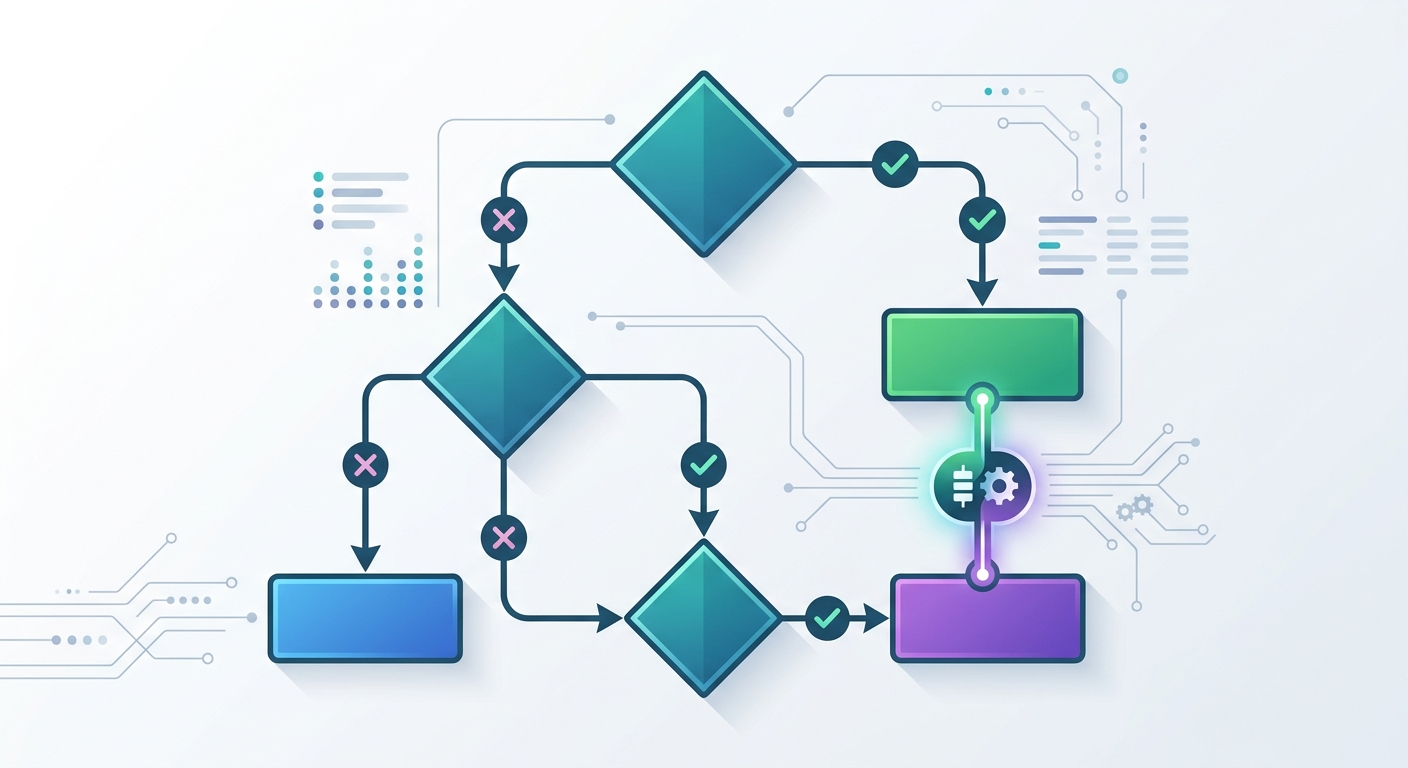
When in doubt, start with prompt engineering. Measure baseline performance. Only escalate to RAG or fine-tuning when prompt engineering demonstrably fails to meet requirements.
Hybrid Approaches: When RAG Meets Fine-Tuning
The most capable enterprise AI systems combine RAG and fine-tuning. RAG provides factual grounding from current documents. Fine-tuning shapes behavioral consistency, output schema, and domain terminology.
A customer support bot illustrates the pattern. RAG retrieves the relevant product documentation and policy pages at query time. A fine-tuned model interprets the retrieved context and generates responses that match brand voice and follow the required response format.
Implementation stacks typically combine LangChain or LlamaIndex for RAG orchestration with a fine-tuned model served via vLLM or TGI (Text Generation Inference, Hugging Face). This hybrid approach is more complex but consistently outperforms single-method systems in production benchmarks.
Common Pitfalls and How to Avoid Them
Fine-tuning on stale data. Teams sometimes fine-tune on outdated product documentation or old customer interaction logs. The resulting model encodes information that no longer reflects reality. Always verify that your training data is current before starting a fine-tuning run.
RAG with poor-quality source documents. Garbage in, garbage out. If your knowledge base contains outdated pages, contradictory information, or poorly written content, RAG will retrieve and amplify those problems. Invest in data quality before investing in RAG infrastructure.
Skipping baseline measurement. Teams often customize before measuring. They spend weeks fine-tuning a model only to discover that a well-crafted prompt achieved 90% of the same performance. Measure your baseline with prompt engineering first. Customize only the gaps you identify.
Ignoring catastrophic forgetting. Fine-tuning can cause a model to forget capabilities it had before. A model fine-tuned for legal contract analysis may lose its ability to write Python code. Use LoRA with regularization and monitor held-out task performance throughout training.
Expert Q&A
Q: How often should I update my RAG index? A: It depends on data volatility. For product catalogs and pricing, daily reindexing is common. For policy documents, monthly may suffice. Use change detection triggers rather than fixed schedules. Rebuild the index incrementally when source documents change, rather than rebuilding the entire index each time.
Q: What is the minimum dataset size for effective fine-tuning? A: For LoRA fine-tuning, 500–1,000 high-quality examples can produce measurable improvements. For full fine-tuning, aim for 5,000–10,000 examples minimum. Quality and consistency matter more than quantity. A 1,000-example dataset with clean, diverse labels outperforms a 10,000-example dataset with noise. For very niche domains, even 200–500 examples with strong labeling quality can yield a useful fine-tune, especially with QLoRA.
Q: Can prompt engineering replace fine-tuning for style control? A: Partially. For simple style preferences, a detailed system prompt with examples often suffices. For deeply embedded behavioral patterns — consistent JSON output schemas, domain-specific terminology, complex decision logic — fine-tuning is more reliable and reduces prompt overhead at inference time. The practical test: if your system prompt exceeds 2,000 tokens to achieve consistent output, consider fine-tuning.
Q: How do latency requirements change the decision? A: If response latency must stay under 200ms end-to-end, fine-tuning has an advantage. RAG adds a retrieval step that typically costs 50–200ms. For sub-100ms requirements, a fine-tuned model with no retrieval step is the only viable option. For latency-tolerant applications (internal tools, research assistants), RAG's overhead is rarely a blocker. Consider a cascaded approach: keyword match first, RAG only for ambiguous queries, to balance accuracy and speed.
Q: What are the real GPU memory requirements for fine-tuning? A: With QLoRA (4-bit quantization + LoRA adapters), a 7B parameter model fine-tunes on a single 24GB GPU (RTX 4090 or A10G). A 13B model typically needs 40–48GB (A100 40GB or two consumer GPUs). Full fine-tuning of a 7B model needs roughly 60GB of GPU memory; 13B needs 150GB+. These requirements apply per training run — inference memory is separate and typically lower.
Q: When should a team NOT use RAG? A: Avoid RAG when your knowledge base is small and stable (under 500 documents that rarely change), when you need guaranteed sub-100ms latency, when source document quality is poor and cannot be remediated, or when the retrieval recall would be inherently low (e.g., highly abstract concepts that resist clean chunking). In these cases, fine-tuning or prompt engineering is more appropriate.
Ready to build your enterprise AI strategy? Subscribe to the Algorithmine newsletter for more practitioner guides on LLM implementation, customization, and deployment.